Mr Bani and I are in an organizing frenzy here at casa Bani. As you may or may not know, we live in a two-bedroom apartment with one bathroom, with a total square metrage of just under 70. And there are five of us. So thank God we always resisted the children's desire for a pet, I say. There is a certain amount of compact living going on here, and by that I mean that we have a lot of stuff and it is everywhere. If that's compact, we're it. And 1½-year-olds? They believe in entropy. One spends a frighteningly large amount of time picking up stuff that he has emptied out. And then, finally, not bothering to. I had forgotten (as in repressed) that part about having small kids. Give me teenagers any say. You just say "Hey you, what the hell?" and they pick it up themselves.
So, we decided that we needed to change the furniture around in the livingroom and put the bookshelves on the other wall and in the corner, aso we could put those two cabinets from the Ivar range that have been "temporarily" arranged these past three years on top of one another on top of a semi-antique chest of drawers in our miniscule bedroom alongside that wall and so on. You get the picture - it isn't a tidy one. And where are the wheels we once had screwed on under that second cabinet? We unscrewed them to stack the cabinets and now I only found one set. Arse.
In order to manage this we had to scrap one whole bookshelf. This meant that we first had to have a big clear-out in the cellar so we could move discarded-but-not-unwanted-really books down to the cellar (and said shelf, of course). And since we can never be really structured about these things we end up just throwing things away and not even attempting to sell them - although to be fair, most of it was sort of rubbish anyway. Anyway, so all the course books, representing thousands of dineros (yet with no actual degree to show for it...) are being moved into the cellar, finally, and lots of books are finally being deemed as Not Necessary to Own so we're giving them away to the Christmas flea market at church. BUT, and here comes the explanation for the title of this entry - we've thrown away lots too. Books that were breaking (fair enough), but also just books that we didn't think were worth the trouble of carting off to some other destination than the rubbish room (my English translation of the word soprum...). And since they end up in the burnable bin in the rubbish room - WE ARE BOOKBURNERS, as mr Bani said, with a wince. We ended up becoming less and less ruthless, so the pile that is going to charity is now larger than it would have been if we'd carried on with the sacrilege. See, I'd planned to bookcross a lot of this stuff. I'm a CRAP bookcrosser. I should delete my membership. I haven't had a chance to search for ANY books, and I haven't released any, or even gotten to the point of starting to register one for release. And now I won't be doing any releasing for a long time, since I'm not prepared to let go of the ones I have left. (Yet.)
Among the books I finally got rid of is an old copy of Fanny Herself by Edna Ferber. I've held on to this book for ages because it made an impact on me. Little bits of it often drift to the surface of my thoughts - for example, for a while there Fanny dates a man who keeps volunteering snippets of Useful Information, so she dubs him "Fascinating Facts". So far I'm the only one who gets it when I say "fascinating facts" with irony in reference to people like that. It doesn't seem to be a widely read novel, but I really like it. Fanny grows up in a small town with her mother and brother. Her mother works very hard in her little shop to support them, but ends up being outmanouvered by a new, larger store. When her mother dies Fanny swears to never become like her, working her life away for nothing. She's going places, she is. Connecting her mother's failure to Judaism too, she rejects her entire background and goes off to the big city to make a career for herself. In the end she mellows and reconnects with her past, and the whole thing is quite sentimental (in the best possible way) and lovely. Also, it paints a great picture of a professional woman - actually, of two professional women, if we count Fanny's mother - in the 1910s and before. The Amazon link above states "that Edna Ferber has been called the greatest American woman novelist of her day" and I think that this book is well worth reading, as well worth it as, say, A Tree Grows In Brooklyn, which I think is much more widely known. Well, I don't have it anymore. Nor do I have Flickan som inte sa nej by Elsa Nyblom. I've insisted on holding on to this for years, but I'm ready to let go now. This book is so little known I can find no good link to it, only online second-hand book sellers telling me they have it, and one Bookcrossing entry that turned out to be a dud. It's not about much this book, but I quite liked it. I liked how it felt so set in that particular time (1930s, 1940s), and its sort of dreamy quality, even though it deals with real matters. I can hardly remember exactly what it's about any longer, to be honest. The main character is a young girl who is easily influenced (she doesn't say no is the title), so she agrees to be married to a much older man. It's not a depressing story about abuse or anything, but it's about having a sense of self and being able to say what you want for yourself. Her life doesn't turn out badly, but she has to learn to say no. That's it.
It's a bit of a wrench to get rid of these old novels, because I might never be able to get hold of them ever again. I've found them in second-hand stalls and bought them on impulse. My one, sole ambition in life really has been to have a Library. To have bookshelves covering the walls, and to be able to go in there and see my life through the books I've read. It makes me sad that I can't realise this dream. I've wanted to save all those 1940s "young women" novels I'd collected, but I haven't. How will I ever get hold of Flickförbundet Silverkorset by Bertha Clément again - a 1927 story about some young girls who meet at a boarding house during their holidays and form a sort of charity club together. A moralistic little book, to be sure, but it paints an interesting picture of pre-Nazi Germany. I have to hope that Bokmamsell and others like her will remember all those books, because I can't be their custodian right now, and maybe never.
Anyway, St. Lars Catholic Church in Uppsala, during the 1st of Advent weekend - that's the place to be if you want to buy the Bani cast-offs. See you there - I'll be rescuing novels from other broken libraries.
Friday, August 01, 2008


Saturday, July 26, 2008
C.S.Lewis - The Chronicles of Narnia (sort of)
I went to see the new Narnia film with my kids (obviously I'm referring to the two older ones only, duh) last week (the Prince Caspian one). It was great getting out and spending some time with them. They've been away with their grandparents for several weeks, and, well, one does miss them. Now, going to the cinema isn't really very "spending time with" anyone, but walking home afterwards and discussing the film and other subjects is. It was a lovely evening, and we didn't fight once during the 2K trek thankyouverymuch. We talked about the film, which they both really enjoyed, and they actually had some very insightful comments about how it differed from the first one. I had the little gripe that there was an awful lot of fighting, which gets boring in my opinion. Also, all the fights are bloodless so as to not frighten the kiddies - but that just doesn't really work. Massive big swordfight and it's OBVIOUS that folks (people as in humans this time! Not just the Witch's monsters!) are being slaughtered - but no blood on Peter's sword. Annoying.
Personally I've never been that enamoured with the Narnia Chronicles as books. Moralistic plodding towards a predictable end in my harshest opinion. Some days I'm more mellow though - I mean, I'd have loved them if they were the only fantasy around, but there's much better stuff (like Tolkien. I still haven't written The Tolkien Blog Entry, but one day I will...). And compared to that they fall very short of the mark. One of my home language teachers made me read The Horse and His Boy and I remember how dreary I found it. I re-read it as an adult and found it better than my memory of it - up until the point where Aslan starts playing mind games with the lad and "testing" him. I don't get that. As a Christian I find it not only overly blatant, but also depressing. So this is God, is it? Well, thanks. So in short I was rather pleased with how the first film didn't focus on the moral but instead went more gung-ho action. I didn't feel it did the story any harm whatsoever. In this Prince Caspian one it becomes more problematic though, as the issue of the murdering of humans should be addressed (why is it not an act of evil etc.). I'm sure Lewis has some explanation for it in the novel but I can't remember. Haven't read that one in years and years. And in the end when (STOP READING NOW IF YOU DON'T WANT A SPOILER) Susan and Peter get told that they cannot return to Narnia - the film offers no explanation, but I'm pretty sure there's some claptrap about it in the book, something about Susan using lipstick and not being pure enough anymore. Not saying they should have run with that explanation, but they should have put something more in I think. Now I had to tell Minima that it was because they were adults now, and only children could come to Narnia. I feel confident in stating that this is a good and true explanation, so I think they could have spelled it out in the film.
In other news I have 12 glorious work-free days ahead of me. It's hotter than hell, but we won't be able to cycle off to go swimming every day since mr Bani's bike got stolen. It hasn't been our year for bike safety at all - mine got stolen too this June and I'm now pedaling around on a new one. So we'll fill our days with rearranging the furniture in the living-room, and I need new glasses and a haircut. It's a busy busy life, isn't it. On the up side BBC Prime is showing Dr Who S2, which I haven't seen all of. With a bit of luck I might be able to compile a good reading list too. I've just not had any time for proper reading, and it's getting me down. Time to do something about that!
Personally I've never been that enamoured with the Narnia Chronicles as books. Moralistic plodding towards a predictable end in my harshest opinion. Some days I'm more mellow though - I mean, I'd have loved them if they were the only fantasy around, but there's much better stuff (like Tolkien. I still haven't written The Tolkien Blog Entry, but one day I will...). And compared to that they fall very short of the mark. One of my home language teachers made me read The Horse and His Boy and I remember how dreary I found it. I re-read it as an adult and found it better than my memory of it - up until the point where Aslan starts playing mind games with the lad and "testing" him. I don't get that. As a Christian I find it not only overly blatant, but also depressing. So this is God, is it? Well, thanks. So in short I was rather pleased with how the first film didn't focus on the moral but instead went more gung-ho action. I didn't feel it did the story any harm whatsoever. In this Prince Caspian one it becomes more problematic though, as the issue of the murdering of humans should be addressed (why is it not an act of evil etc.). I'm sure Lewis has some explanation for it in the novel but I can't remember. Haven't read that one in years and years. And in the end when (STOP READING NOW IF YOU DON'T WANT A SPOILER) Susan and Peter get told that they cannot return to Narnia - the film offers no explanation, but I'm pretty sure there's some claptrap about it in the book, something about Susan using lipstick and not being pure enough anymore. Not saying they should have run with that explanation, but they should have put something more in I think. Now I had to tell Minima that it was because they were adults now, and only children could come to Narnia. I feel confident in stating that this is a good and true explanation, so I think they could have spelled it out in the film.
In other news I have 12 glorious work-free days ahead of me. It's hotter than hell, but we won't be able to cycle off to go swimming every day since mr Bani's bike got stolen. It hasn't been our year for bike safety at all - mine got stolen too this June and I'm now pedaling around on a new one. So we'll fill our days with rearranging the furniture in the living-room, and I need new glasses and a haircut. It's a busy busy life, isn't it. On the up side BBC Prime is showing Dr Who S2, which I haven't seen all of. With a bit of luck I might be able to compile a good reading list too. I've just not had any time for proper reading, and it's getting me down. Time to do something about that!
Monday, July 21, 2008
Marcus Zuzak: The Book Thief
This is the only book I've read for ages. Unless re-reading some Laurie King or Kathy Reichs while nursing Junior to sleep counts. I have been only working. *sigh* Also, one-and-a-half-year-olds never stop walking, so you can't sit peacefully and read when you ARE home. Or rather, out playing with them.
My sister lent me this, she said it was quite sad but not completely depressing. And so it isn't. It's about a young girl in Nazi Germany, just before the war. Her parents are dissidents, and she gets placed with foster parents (presumably forcibly, i.e. her mother is sent away afterwards). She becomes very close to them, especially her new father. He is also a bit of a dissident, who has repainted Jewish houses after they've been vandalized. (So why would they be permitted to foster children? Bit odd really.) He teaches her to read, using her first stolen book.
One day a Jew turns up on their doorstep. He is the son of Papa's friend from the trenches, and Papa has promised to help. They hide him in the cellar, and he and the girl become friends.
Okay, so the end is very sad. I do cry when the town gets bombed and all those people die. But on the whole I'm not tremendously pleased with this novel. I've been trying to pin-point why... I think it's due to a lot of small things. For one thing, the novel is narrated by Death. And I'm sorry, but I've read too much Terry Pratchett, so that just becomes weird. I keep reading Death's narration in small caps and expecting one-liners. (Well, the effect wore off after 2/3 of the book, but it was a persistent feeling.) For another, the author has written about Germans and their wartime suffering, but seems a little unwilling to admit this. He seems to feel a need to emphasise that the suffering of the Jews was much worse. And I can't help feeling that - yes? We know. Surely you don't think that Holocaust revisionists are going to read this and use your novel as proof for their mad "history" theories of you don't point out several times that the Germans as a collective were responsible for the concentration camps? I think I'm being a little unfair, but that's how I read it when I was reading it. I wanted a little more balance, somehow. A little more artistic daringness - I wanted Zuzak to dare to NOT compare sufferings, but instead just describe it. Because he is a very talented, a very good writer, don't get me wrong. Thirdly, I was annoyed with a slight preoccupation with throwing in some German words and then translating them. It annoys me. It's something people do who don't really speak the language but need to put bits in for local flair, and I think Zuzak's better than that.
It is recommendable though. A strong début (I think it's the début). Very.
My sister lent me this, she said it was quite sad but not completely depressing. And so it isn't. It's about a young girl in Nazi Germany, just before the war. Her parents are dissidents, and she gets placed with foster parents (presumably forcibly, i.e. her mother is sent away afterwards). She becomes very close to them, especially her new father. He is also a bit of a dissident, who has repainted Jewish houses after they've been vandalized. (So why would they be permitted to foster children? Bit odd really.) He teaches her to read, using her first stolen book.
One day a Jew turns up on their doorstep. He is the son of Papa's friend from the trenches, and Papa has promised to help. They hide him in the cellar, and he and the girl become friends.
Okay, so the end is very sad. I do cry when the town gets bombed and all those people die. But on the whole I'm not tremendously pleased with this novel. I've been trying to pin-point why... I think it's due to a lot of small things. For one thing, the novel is narrated by Death. And I'm sorry, but I've read too much Terry Pratchett, so that just becomes weird. I keep reading Death's narration in small caps and expecting one-liners. (Well, the effect wore off after 2/3 of the book, but it was a persistent feeling.) For another, the author has written about Germans and their wartime suffering, but seems a little unwilling to admit this. He seems to feel a need to emphasise that the suffering of the Jews was much worse. And I can't help feeling that - yes? We know. Surely you don't think that Holocaust revisionists are going to read this and use your novel as proof for their mad "history" theories of you don't point out several times that the Germans as a collective were responsible for the concentration camps? I think I'm being a little unfair, but that's how I read it when I was reading it. I wanted a little more balance, somehow. A little more artistic daringness - I wanted Zuzak to dare to NOT compare sufferings, but instead just describe it. Because he is a very talented, a very good writer, don't get me wrong. Thirdly, I was annoyed with a slight preoccupation with throwing in some German words and then translating them. It annoys me. It's something people do who don't really speak the language but need to put bits in for local flair, and I think Zuzak's better than that.
It is recommendable though. A strong début (I think it's the début). Very.
Tuesday, June 17, 2008
Är jag en kulturtant nu? På riktigt?
I fredags (jag veeeeet, det var länge sedan, men jag blev inkallad att jobba i lördags och yada yada yada ni vet hur det är) hade jag det stora nöjet att bevista en fest på Street i Stockholm, anordnad av Ordfront förlag för att avtacka den avgående förlagschefen. Det var ju jättekul bara att bli inbjuden, när allt jag gjort är en liten översättning, så självklart ännu roligare att faktiskt gå dit. Nu är jag inte så modig att jag vågar dyka upp helt solokvist. Istället klistrade jag mig fast på kompisen E, en av förlagets äkta anställda, och lät mig presenteras för diverse folk. Mycket trevligt. Bl.a. träffade jag en ännu icke utgiven deckarförfattarinna vars namn jag nu blir osäker på - Veronika? Kan det ha varit. I vilket fall som helst var hon mycket trevlig och vi var rörande överens om att Stieg Larsson är överreklamerad. Jag ska absolut läsa hennes bok när den kommer ut i november eller vad det var. Fördelen med henne var också att jag inte behövde skämmas för att jag inte läst henne, eftersom hon inte fanns i tryck så att säga. Satt nämligen bredvid den hemlige kocken också, och fick erkänna att nej, det hade inte blivit av (vilket känns extra dumt när det är ett ämne som intresserar mig). Mittemot satt en deckarförfattare som jag inte heller läst. Aj aj. Han skriver deckare som utspelar sig på Gotland, så det torde vara denne man. Med skammens rodnad på mina kinder ska jag nu se till att läsa även hans alster. Och hans fru Lotta Kühlhorn på andra sidan - hennes namn kände jag igen i alla fall utan vidare, det finns hopp.
Jag och E åkte hem med våra amningsbröst ganska tidigt. Därmed missade vi nog det värsta röjet, men det gör inte så mycket när man sover så lite som vi fått göra på sistone. Kul var det ändå att få komma iväg på en Ny Grej sådär på en helt vanlig fredag! Tack Ordfront för inbjudan!
Imorgon börjar jag jobba klockan 7.30. Häpp.
Jag och E åkte hem med våra amningsbröst ganska tidigt. Därmed missade vi nog det värsta röjet, men det gör inte så mycket när man sover så lite som vi fått göra på sistone. Kul var det ändå att få komma iväg på en Ny Grej sådär på en helt vanlig fredag! Tack Ordfront för inbjudan!
Imorgon börjar jag jobba klockan 7.30. Häpp.
Saturday, June 07, 2008
Bill Bryson: The Life and Times of the Thunderbolt Kid
This is on loan from my brother. I think it was I who got it for him for Christmas, but no matter who it was, I remember saying “dibs to borrow” when he tore the wrapping paper. I’d dearly love to have all of Bill Bryson’s books, but I’m trying to amass books slowly, in a manner more similar to the gradual formation of a river delta than the sudden appearance of an entire archipelago after an underwater volcanic eruption. So borrowing is good, and it’s even better to get people books then that you want to borrow. They have to store them, you get to read them…
This is a book about growing up in
I laughed my backside off several times, naturally. I was also quite touched by Bryson’s homage to his parents. Both his parents were journalists, and Bryson (proudly) states that had his father left Des Moines to work for a bigger, national newspaper he might have been more famous and well-known as the best baseball-writer of all times, but since he stayed he’s more obscure. The theme of Bryson’s childhood fantasy of being a superhero, the Thunderbolt Kid of the title, that theme I could have lived without really, but it’s okay. It’s not really worked into the book enough though, if I have to be honest about it.
Sunday, May 25, 2008
The Yiddish Policemen's Union by Michael Chabon
Not long ago, Erin of A Dress A Day wrote about a word I'd never heard, namely diegogarcity, which means that you learn something new and then suddenly notice it all over the place. And it was also through a link in another of Erin's posts that I learnt of the red heifer, because being Catholic of course my Bible skillz are a little atrocious - too busy remembering the sacraments, dontchaknow. Anyway, so then I read The Yiddish Policemen's Union by Michael Chabon, and was immensely gratified that I knew what was coming the minute they arrived at the field with cows. Stuff like that makes you feel smart. So thank you Erin!
The novel is based on an alternative history premise. During WWII the Alaskan town of Sitka attracted Jewish refugees and settlers, and after the war the US government gave the Jews autonomous control of the place for 60 years. In other words Sitka is an alternative to the state of Israel, which in this novel lost that first Arab-Jewish war in -48, and all the New Hebrews were driven out. Instead Sitka grows to a Yiddish city of over 3 million inhabitants. Our hero is Meyer Landsman, a noir-esque policeman with plenty of demons, who hides in his work and in alcohol, waiting for Reversion, when Sitka once again becomes American and all the Jews (almost) have to leave. He lives at a grotty hotel, and one night the manager wakes him and asks him to come look at a dead body in another room. This becomes a case that he gets told to drop, but can't. Instead he and his half-Indian partner-cum-cousin slog at it, to find some sort of truth.
The idea of the Yiddish culture living on is, in itself, fascinating. The shards that survived the Holocaust were all but swallowed up in life post-war, and perhaps especially in Israel's desperate desire to leave the shtetl behind once and for all. Here they all speak Yiddish, except to now and they say "fuck you" in "American". People play chess and klezmer, they eat kugel and pickles, no-one has neo-Hebrew names. Chabon's future yiddische Sitka is quite depressing though. Crime seems to be rife, but maybe this is just because it's a cop novel after all, and that's what they see. In an unusual twist one of the most powerful Orthodox rebbes is also a major crime lord - the ultimate break with shtetl subservience perhaps. Is it this bleak because Sitka is only on loan? Because the shtetl came with the Jews to Sitka (not my opinion necessarily, I think our hero Meyer Landsman voices it at some point)? Because all hope really has died after the Holocaust and death of the fledgling Jewish state? I haven't quite decided what the angle is - if there is any. I read (on Wikipedia) that it was being filmed by the Coen brothers. I wonder if they'll be able to pull off the many layers the novel has, or if it will end up one-dimensional - good cop with booze problem and hot ex-wife. The Coens don't have a one-dimensional track record by any means, but the novel is full of pitfalls. And language - are they going to film it in Yiddish? How are they going to manage that? If they don't they'll miss out on a lot.
I had a lot of things I wanted to write about The Yiddish Policemen's union, but I'm having trouble expressing my thoughts... Let me finish by stating that I definitely will be reading more of Michael Chabon. He's very good.
The novel is based on an alternative history premise. During WWII the Alaskan town of Sitka attracted Jewish refugees and settlers, and after the war the US government gave the Jews autonomous control of the place for 60 years. In other words Sitka is an alternative to the state of Israel, which in this novel lost that first Arab-Jewish war in -48, and all the New Hebrews were driven out. Instead Sitka grows to a Yiddish city of over 3 million inhabitants. Our hero is Meyer Landsman, a noir-esque policeman with plenty of demons, who hides in his work and in alcohol, waiting for Reversion, when Sitka once again becomes American and all the Jews (almost) have to leave. He lives at a grotty hotel, and one night the manager wakes him and asks him to come look at a dead body in another room. This becomes a case that he gets told to drop, but can't. Instead he and his half-Indian partner-cum-cousin slog at it, to find some sort of truth.
The idea of the Yiddish culture living on is, in itself, fascinating. The shards that survived the Holocaust were all but swallowed up in life post-war, and perhaps especially in Israel's desperate desire to leave the shtetl behind once and for all. Here they all speak Yiddish, except to now and they say "fuck you" in "American". People play chess and klezmer, they eat kugel and pickles, no-one has neo-Hebrew names. Chabon's future yiddische Sitka is quite depressing though. Crime seems to be rife, but maybe this is just because it's a cop novel after all, and that's what they see. In an unusual twist one of the most powerful Orthodox rebbes is also a major crime lord - the ultimate break with shtetl subservience perhaps. Is it this bleak because Sitka is only on loan? Because the shtetl came with the Jews to Sitka (not my opinion necessarily, I think our hero Meyer Landsman voices it at some point)? Because all hope really has died after the Holocaust and death of the fledgling Jewish state? I haven't quite decided what the angle is - if there is any. I read (on Wikipedia) that it was being filmed by the Coen brothers. I wonder if they'll be able to pull off the many layers the novel has, or if it will end up one-dimensional - good cop with booze problem and hot ex-wife. The Coens don't have a one-dimensional track record by any means, but the novel is full of pitfalls. And language - are they going to film it in Yiddish? How are they going to manage that? If they don't they'll miss out on a lot.
I had a lot of things I wanted to write about The Yiddish Policemen's union, but I'm having trouble expressing my thoughts... Let me finish by stating that I definitely will be reading more of Michael Chabon. He's very good.
Friday, May 23, 2008
Monday, May 19, 2008
Terry Eagleton: The Truth About the Irish
The other day my husband texted me: "Does your bag feel heavier than normal?" Well yes, it was a little heavy, but mostly because I'd found The Yiddish Policemen's Union by Michael Chabon at the library in hardback, and I'm not used to lugging hardback novels around - and I didn't think that was what he meant. So I texted back "What? What?", thinking that maybe Minimus had put his wallet in my bag or something, thus ruining all shopping plans for that day, and he texted back "look properly" - so I did, and in one of the front pockets I found this little volume. Wasn't that sweet? Impromptu present! God it's embarrassing, I never do this for him. I'm hereby making a note to change.
The book is a little encyclopedia of Irishness written (clearly) for Americans. The kind of yanks who turn up on the Emerald Isle dressed in Aran jumpers expecting thatched cottages and plain-spoken peasants. You look up words like begorrah and craic, but also jews, children, RTE and Easter 1916. It's very funny in an understated way. The articles can digress wildly from their starting point, as the entry Phoenix Park shows us - it starts off by describing where Phoenix Park is, and then moves on to the Duke of Wellington, Irish people trying to be English, Irish-British relations, Americans' shaky knowledge of geography and why the British are parochial. It ends with
My fave bit I can't find at the moment, so I'll just have to lend you the book if you're interested. Worth it!
None of this has anything to do with Phoenix Park, but Irish thinking is famously digressive.I like that a lot.
My fave bit I can't find at the moment, so I'll just have to lend you the book if you're interested. Worth it!
Sunday, May 18, 2008
Antonia Quirke: Madame Depardieu and the Beautiful Strangers
The beautiful strangers are the actors that Antonia Quirkes cinematographic obsession focuses on. Ever since her childhood she's loved films, and actors especially. This is a very frank autobiography, and I would have liked it more had I known her from Eve. She's quite a clever, rambling writer, so it wasn't a bad read, but I don't know who she is. And I googled her, but there's not an awful lot out there.She's some sort of film critic, but that's all in the book so I knew that. She's married to Jonathan Marr, whom I should also know about, apparently. But I don't. He's in the book too, of course, vyeing for Antonia's attention with her handsome actor loves.
Bits of this book are very funny indeed, bits would be funnier if I knew who she was going on about, bits are just okay, bits are actually moving. I got it from my editor friend E, who got it via work and made the probably wise decision not to get it translated. It's not translatable, because we don't know who Antonia Quirke is, and there isn't much else of tremendous interest in the book. Although after having read it I can say she sounds rather nice, if a bit scatterbrained.
If anybody wants to borrow it let me know. There was more I was going to say about it, it's not crap so merits more than this scant post, but by now it's been a while and I've forgotten the goodest parts so to speak. I can say that if she could write about something more universal, it could turn out great.
Bits of this book are very funny indeed, bits would be funnier if I knew who she was going on about, bits are just okay, bits are actually moving. I got it from my editor friend E, who got it via work and made the probably wise decision not to get it translated. It's not translatable, because we don't know who Antonia Quirke is, and there isn't much else of tremendous interest in the book. Although after having read it I can say she sounds rather nice, if a bit scatterbrained.
If anybody wants to borrow it let me know. There was more I was going to say about it, it's not crap so merits more than this scant post, but by now it's been a while and I've forgotten the goodest parts so to speak. I can say that if she could write about something more universal, it could turn out great.
Wednesday, May 14, 2008
Ursula K. Le Guin: The Left Hand of Darkness
Can’t remember how this book turned up in our house, but we own it. It must be the mister again. I like Ursula K, although I think she can be a little uneven as a writer. Her Earthsea books are of course classic. It took me ages to read them, I didn’t get around to it until I was an adult, and then I read them all in one sweep. The differences between the first ones and the last in the series became very apparent then. The first ones are, really, better as fantasy novels, since the latter ones are more argumentative. I’d hate to use the word preachy, but I had only four hours of sleep so I will, since my brain can’t find me another word. However, I haven’t actually read a lot of her books. That becomes clear now that I’m looking at her website, and seeing the very impressive bibliography. The library probably has it all, amassed during the decades of authorship, so I’ll just have to dedicate myself. (Speaking of library, I managed to run in today after work, and wasn’t allowed to borrow a book since I had a 55 kr debt on my card for late books. Embarrassing. They’d all been returned though (my lovely husband comes through once again!), so it was just a matter of giving them what coins I had to get the debt under 50 kr, which is the magic limit. Take heed, and learn from my absentmindedness!)
Anyway, according to said bibliography The Left Hand of Darkness is also part of a series (although I’m guessing more loosely held together) – the Ekumen novels. The Ekumen is a sort of space UN of the future, that with tremendous patience sends emissaries to non-member planets, to establish some form of peaceful relationship, simply for knowledge really. They only send one, because one alien will not be seen as an invasion. Enter Genly Ai, a (probably black) human who has come to the planet Winter, or Gethen, as an emissary of the Ekumen, a planet curious in that the inhabitants have no gender, and that it should really be too cold to sustain life. It is almost always winter. Only when Gethenians are “in heat”, in kemmer, which occurs on a cyclical basis, do they develop full-grown genitalia. But this kemmer-induced gender is not static. One person can both father children and give birth to them during a lifetime. The planet has two main large countries, one a traditional monarchy ruled by despotic and insane royals, who nevertheless give their subjects a lot of personal freedom compared to the other, a Soviet-type modern state that appears open and forward-thinking – until you’re sent to a prison camp, naked. Genly Ai unwittingly becomes a political pawn, and ends up depending on the only person he was sure he couldn’t trust.
Ms Le Guin wrote the novel expressly to explore the subject of gender and duality. Is gender necessary? What happens if there is no gender, if we’re not ruled by our gender roles? If they become meaningless? Gethenians cry freely, but can be tough too. In my opinion the novel has become rather dated in its handling of the subject. Genly Ai thinks too much like a human of the 1960s, which jars a little when we’re supposed to imagine him in a completely different time. He talks about his masculine pride being wounded, whereas I can already see that men are coming away from such notions. So those weren’t my favourite bits. But that aside, it’s quite a marvellous, different secondary universe Le Guin has created here. I really must read the book again some time, I think I missed lots. It’s surprisingly dense, and doesn’t explain much – preferring to throw you right into the story. My favourite type of fantasy/sci fi!
And here’s the baby, so the end for now….
Friday, May 09, 2008
Jasper Fforde: First Among Sequels
The latest in the Thursday Next series, a series I’ve had great pleasure from. Now,we’re not in the eighties any more. Thursday and Landon are long married, with three children. Thursday no longer works with the Literary Detectives, since most of Spec Ops has been dismantled. She still works at Jurisfiction however, and her carpet laying business is a front for covert Spec Ops work with former colleagues – not to mention her cheese-smuggling side income. None of this is known to Landon though. Now, people seem to be reading fewer books, which puts the Book World at risk, and the Goliath Corporation seem to be up to something. And Thursday’s and Landon’s firstborn, Friday, is not looking as though he means to fulfil his destiny of heading the Time Police.
Tuesday, May 06, 2008
Laurie R King: Touchstone
So, enough of the Livejournal-esque rants – Touchstone. *rubs hands with glee* This is a stand-alone novel, and I previously very much enjoyed Laurie’s stand-alones, I think especially Folly. Also, it’s very good for me, as a reader, to be forced to break free of the tyranny of a series and the characters therein. One does become a little too obsessed and stale I think. What can become true of the writer certainly can become true of the reader.
The story centres on Harry Stuyvesant, an American FBI agent – except not FBI, the other agency that preceded the FBI, the name of which escapes me at the moment, and I’m writing on the train (yes, the train now, because I had to keep going next trip) without the book at hand and no interwebz – who arrives in England to hunt for a bomber, a terrorist. His agenda is personal, so while he claims to be in
The idea of a person whose war experiences have left him supersensitive did, at first, strike me as more than a little naff, to be honest, and I blame that horrible tv series about the Vietnam veteran. You know, he’s developed superhearing and supersight in the jungle, and now he fights crime in that other jungle, the big city. And whenever he hears something four blocks away the camera sort of does this zoom-pan out-zoom-pan out thing that is really silly. As naff as Bionic Woman (or Man), the original. However, Laurie is a good enough writer to carry it off. Bennet is not naff. Actually. Nevertheless, I am not 100% happy with that theme, because I never really get into it as a main theme. The whole book is named after Bennet after all (the Touchstone), but somehow he never seems to really be the centre of things. Hm. But I am very tired and sleep-deprived, so I may be talking out of my arse.
The research is thorough, the writing is fluid, and I’m kept guessing about the culprit until the end (well done!). Nevertheless I found myself not completely riveted, and I’ve tried to think about why that might be. Possibly I expected something different, pure and simple, and was distracted from enjoying the book by those expectations.
Also, the book strikes me as a comment on current affairs in a sense (I think it sort of is, if I remember Laurie’s blog entries correctly, but again, I may well be mistaken), as it focuses on terrorism, bombings, what makes a terrorist and so on. Here, the terrorist is fuelled by the ideas of Anarchism. And since it is (a current-affairs-comment), I sometimes feel it slips into being just a tad too contemporary. There was a turn of phrase here or there that niggled at me.
However, I haven’t yet read a Laurie King I hated, and this certainly is no exception. Plus it’s SIGNED, which would make it a fave no matter what... I should take a photo. Maybe when I become a responsible adult.
Sunday, April 13, 2008
I'm tinkering with the blog...
... while working on a Touchstone post. I'd better hurry up with that, because I have since reading it come a fair way through Antonia Quirke's Madame Depardieu and the Beautiful Strangers, and borrowed the latest Jasper Fforde at the library. I wanted to take photos too, because hey, there's an INSCRIPTION and EVERYTHING in the book. Oh I'm so pleased, still!
Anyway, this post serves mostly as an FYI to say that if you're searching for the labels they're at the bottom. I'm not happy with the labels thing at all, it's too long. And I can't be bothered to learn how to do proper web publishing stuff, which is stupid because then I could make the blog more "me". Actually, I think just taking more photos would help a lot... but then I'd have to find the camera on a regular basis.
Sigh.
Anyway, this post serves mostly as an FYI to say that if you're searching for the labels they're at the bottom. I'm not happy with the labels thing at all, it's too long. And I can't be bothered to learn how to do proper web publishing stuff, which is stupid because then I could make the blog more "me". Actually, I think just taking more photos would help a lot... but then I'd have to find the camera on a regular basis.
Sigh.
Monday, April 07, 2008
Monday, March 31, 2008
Mammon, servant of
I opened an AdSense account, mostly because I'm so curious and I want to see how it works. Not because I think I'll actually make money from it. *guffaw* Let me know if Google pick up on me mentioning sex in my posts and therefore must be wanting to sell sex toys or Russian wives. I'm still sceptical and don't trust this technology at all.
Friday, March 28, 2008
Amy Tan: Saving Fish from Drowning
I couldn't resist picking this paperback up at the library (together with Evanovich that last time), since I figured what with the new job requiring commuting I'd have all this reading time. However, despite this undoubtedly being true, I haven't read much. I've got a colleague who takes the bus with me most days so we talk, or I forget the book, or I'm so tired... excuses aplenty. Also, this book is a bit of a slow read, like wading through treacle. It hasn't grabbed me, I'm nearing the end, and I've started skimming to be rid of it.
I think part of the trouble is that the storyline differs a little from the Typical Tan (says the woman who's read all of two novels). Bibi Chen is murdered shortly before she was about to lead a group of her friends on a Buddhist art trip through China and into Burma. The friends go anyway, and Bibi's ghost follows and narrates the story for us. They end up being amicably kidnapped and disappear.
It seems like she was driven to write it so as to take a stance against the Burmese junta (emotionally understandable and absolutely commendable!). However, somehow the heart isn't there. By heart I don't mean the outrage against the atrocities - that's there - but the sincerity that comes of writing what you know. There is a farcical tone which I'm supposed to enjoy according to one of the cover blurbs, but I don't. It just confuses me.
I think part of the trouble is that the storyline differs a little from the Typical Tan (says the woman who's read all of two novels). Bibi Chen is murdered shortly before she was about to lead a group of her friends on a Buddhist art trip through China and into Burma. The friends go anyway, and Bibi's ghost follows and narrates the story for us. They end up being amicably kidnapped and disappear.
It seems like she was driven to write it so as to take a stance against the Burmese junta (emotionally understandable and absolutely commendable!). However, somehow the heart isn't there. By heart I don't mean the outrage against the atrocities - that's there - but the sincerity that comes of writing what you know. There is a farcical tone which I'm supposed to enjoy according to one of the cover blurbs, but I don't. It just confuses me.
Sunday, March 16, 2008
Strage har så rätt så rätt
Läser DN på nätet, och fastnar för Fredrik Strages krönika. Heja Strage, du skriver bra krönikor tycker jag, men den här var ovanligt bra.
Orättvist är vad det är. Och slutklämmen är också så rätt - faktiskt är Dirty Dancing en väldigt jämställd film. Sådana görs inte så ofta, tyvärr.
Hej, jag heter Bani, och jag gillar också Dirty Dancing.
PS: Nu fick jag markera texten i citatet och ändra till svart färg, för annars blir citaten i VIT text av någon outgrundlig anledning. Om någon klok människa vet hur man fixar det så hör av er.
Och den ena repliken är egentligen inte mer korkad än den andra - i synnerhet inte när Duvalls ord citeras av en idiot som just eldat upp middagen. Ändå hamnade "I love the smell of napalm in the morning" på en hedervärd tolfteplats när American Film Institute listade de främsta filmreplikerna någonsin. "Nobody puts Baby in the corner" blev bara nummer 98.
Orättvist är vad det är. Och slutklämmen är också så rätt - faktiskt är Dirty Dancing en väldigt jämställd film. Sådana görs inte så ofta, tyvärr.
Hej, jag heter Bani, och jag gillar också Dirty Dancing.
PS: Nu fick jag markera texten i citatet och ändra till svart färg, för annars blir citaten i VIT text av någon outgrundlig anledning. Om någon klok människa vet hur man fixar det så hör av er.
Wednesday, March 12, 2008
Did I really WIN?
Oh my goodness, I can't describe how pleased this makes me! Scroll to the comments... Time for a happy dance I think! Luckily all my new co-workers are at lunch, so no-one is here to watch me jiggle...
Updates will follow.
Updates will follow.
Saturday, March 08, 2008
Janet Evanovich: To The Nines
Okay, so I'd read it, but I reread it because why the hell not, and I hadn't blogged about it, so brief synopsis: the one where Stephanie has to find an Indian guest worker who has disapppeared, and ends up being stalked by carnation killer dude and goes to Las Vegas.
Thursday, March 06, 2008
Another library failure
I borrowed Janet Evanovich's To The Nines yesterday - and I've read it. *stupid* Anyway, I got a job today so I can maybe afford to buy myself something fun to read instead. Hrmf.
Wednesday, March 05, 2008
Ken Bruen: The Guards
That said, it’s not terrible this. Jack Taylor is a former policeman and continous drunkard, who does a sort of P.I. thing, getting clients by word of mouth. A woman hires him to find out whether her daughter really committed suicide, and Jack discovers a form of conspiracy among the higher-ups, resulting in the genuine or forced suicides of young girls. I think. The precise nature of this conspiracy sort of eludes me now a month or so after finishing it, and frankly, the plot is not what I remember most about the novel. No, Bruen’s mellow yet pained story-telling, and his clipped but poetic language are much more memorable, not to mention a subtle tribute to both the new Ireland, with new ideas, new cultures and immigrants and less Church, and to the old
She ignored this, sat on the bed. The room was cluttered with furry animals,
Pink bears
Pink frogs
Pink tigers
Leastways, I think that’s the colour. I wasn’t about to verify.
Malachy was like Sean Connery, minus
The tan
The golf.
You couldn’t call him a friend. Priests have other loyalties.
See what I mean? After a book of this my eye starts twitching, I swear. Fine, it’s certainly unique and memorable, but really.
Amy Tan: The Kitchen God’s Wife
A long time ago I read The Joy Luck Club and really liked it, but for some reason I never got around to reading more Amy Tan. However, the other day as I sat in the library working on job applications I just happened to be next to section T, and spotted the colourful covers out of the corner of my eye. So I plucked one and borrowed it (and made a mental note to some day read Quicksand by Tanisaki, but I got a deppresso-vibe off it so wasn’t in the mood that day).
The Kitchen God’s Wife is about
The greatest part of the book is therefore narrated by Winnie, who tells us about a life in a China that is now gone, about being the daughter of a rich man’s second wife, about being sent off to live with relatives, about being married off and discovering hell, about losing children and about war. I think Tan does a fabulous job of crossing that gap between Eastern and Western thinking – possibly it is her fellow Chinese-Americans who benefit the most from this, but her insights into a way of thinking and living that is very alien to us are educational to anyone. She is also a skilled storyteller and writer, plain and simple, and her books are easy and pleasant to read, despite the harrowing themes.
That said, I think her stories are too similar to stand up to binge reading, which is when you read everything an author has written that the library (or book shop, if you’re flush and have no shortage of shelf space) has available. (Note that I base this on having read two books only. So take it with a generous fistful of salt, I suppose.) I often binge read authors, but I don’t really recommend it. All the novels blur together, and you start getting annoyed with the author for “always writing the same thing”, which is ridiculous, because that is what a good writer does, writes about what he or she knows. Although Fay Weldon? She deserves the annoyance. Sorry. I’ve stayed annoyed with her for more that 15 years now.
Saturday, March 01, 2008
Apparently the brain can only harbour a finite amount of information
I borrowed Clean Break by Val McDermid from the library, forgetting I'd already read it. And not realising until a chapter in. I read it before I started the blog (to remember what I've read), but I don't think it's an excuse.
However, today I impressed a Scottish fella on the bus by knowing where Fife is, thanks to Inspector Rebus. Don't let anyone tell you there is nothing to be learnt from crime fiction.
However, today I impressed a Scottish fella on the bus by knowing where Fife is, thanks to Inspector Rebus. Don't let anyone tell you there is nothing to be learnt from crime fiction.
Thursday, February 28, 2008
Special Topics in Calamity Physics by Marisha Pessl
This is the book my husband bought me for Christmas. Yes, I did actually finish it a long time ago, but have been waiting for some time to collect my thoughts properly. I have now admitted that this time will never come, so I might as well write what I can and ignore that pretentious nagging feeling at the back of my head, telling me that I shouldn’t bother unless I can produce world-class stuff. With that kind of thinking nothing gets done (like law thesises, incidentally – the lack of one with me as an author is weighing heavily on my mind lately; something needs to be done).
Special Topics of Calamity Physics is a real brick of a book, even as a paperback, with pages of laudatory quotes in the beginning. Our heroine, Blue, narrates in the first person from her college desk. She tells the story of what really happened to her during her dramatic senior year at high school in a small town. Blue has led an itinerary life together with her charismatic, highly intelligent and opinionated college professor father, after her mother’s death when she was a child. Since she’s changed schools several times every year she’s been rather isolated and has a close relationship to her father, who has trained and moulded her to be a prolific reader. Now she will spend her whole senior year in one school, to attain the goal of ending 1st and being chosen as valedictorian. Here she is drawn into a group of “cool kids” under the patronage of teacher Hannah Schneider, who is as charismatic and enigmatic as Blue’s own father in a way.
As the year progresses Blue becomes a part of the group, even though the other youngsters are resentful of her at first. She tries things she’s never tried before, drinking, make-up, she cuts and dyes her hair. After a man dies in an accident at a party at Hannah’s house, the relationship between her and the youngsters sours, and things start changing, ending in Hannah’s death (it’s okay to tell you, since Blue tells you in the beginning, don’t worry). So why did Hannah Schneider die, and how? This is what Blue sets out to tell you. I therefore first expected some sort of detective story. Half-way through the novel I’d come to the conclusion that it probably wasn’t crime fic at all but some sort of high school tale that Americans are so fond of, so when my husband asked me what I though of it when I was more than two-thirds through I held a long speech about how it seemed to be like Heathers, and I’m not sure I got it, since Heathers had been done dammit and what’s Christian Slater doing these days anyway. Then the book changed. I am not embarrassed to admit that I was really taken aback at the twist it took. I did not see it coming at all. However, I would like to point out that I couldn’t very well have predicted it, since some of the information needed isn’t given until towards the end (I may be wrong though. Remember, I read this with one hand while trying to nurse an interested baby most of the time.). So it turns out almost like a thriller at the end. A political thriller at that.
I’m not quite sure what to think of it all. It’s well written, to be sure. I have a slight quibble with the way Blue “footnotes” everything: she’ll describe someone and reference a book, to further clarify what she means I suppose, which is one way to emphasise how well-read she is, but still breaks up my reading flow a little. It’s clever though, and certainly different. Last book I read with such an extensive and unusual use of footnotes was Jonathan Strange and Mr Norrell. But did I like it? Did I enjoy it? Do I think about it now and then? I’m still not sure, and now it’s almost three months since I finished it. I didn’t think I was so rigid in my thinking, that I wanted books that fit into a certain mold, yet I was a bit annoyed with the sudden genre change towards the end. Would I recommend it? Yes, I think I would. I didn’t enjoy it as much I did Donna Tartt’s first novel (note to self – read the second one some day, even if it got worse reviews), and I compare the two because… well, there are similarities after all. But it did interest me, and if nothing else other people have to read it so I can discuss it with somebody.
Friday, February 08, 2008
Men, nu sabbade du ju min googlewhack
I all välmening liksom. Fast nog pirrar det lite dödsskönt i kistan när man får en hänvisning från någon annan stans så där.
Monday, February 04, 2008
Fetton är vi allihopa, jag med och du med
Va?
Såg en annons idag i den lokala gratistidningen (Uppsalatidningen) - nåt konditori annonserar att på tisdag är den första fettisdagen.
SAMHÄLLSOMSTÖRTARE.
Må vara att man kan ha flera fettis-dagar, iofs.
Men det finns bara en FET-TISDAG.
Såg en annons idag i den lokala gratistidningen (Uppsalatidningen) - nåt konditori annonserar att på tisdag är den första fettisdagen.
SAMHÄLLSOMSTÖRTARE.
Må vara att man kan ha flera fettis-dagar, iofs.
Men det finns bara en FET-TISDAG.
Sunday, January 20, 2008
A Good Read
Yesterday there was an article in Dagens Nyheter (well, a column really) about the phrase "a good read". Naturally I can't find the piece online, so I had to go root out the paper manually so to speak *sigh* - always a hassle. Anyway, it's Bokkrönikan by Jonas Thente, for those of you who care. Thente writes that it's hard for Swedish critics, since we still haven't found a Swedish equivalent/translation for/of that essentially feel-good-ish phrase. You can't call a novel about incest and genocide "a good read", he comments (and also touches upon the other two mandatory critic expressions: a must-read and page-turner, both untranslatable so far. Those can be used for books on difficult topics). His final conclusion is that he's glad we lack the expression, because in the end, of all the books labeled "good reads" that he has read, he remembers none of them. You finish the good reads, put the book away, and go off for a good walk, he writes. The end.
I cringed a bit there. I think I use the phrase "a good read" a little too often. Just a tad. Of course, there are (dare I say it?) psychological reasons to why I am so partial to "good reads". Fluffy they may be, but they are restful to the brain. At the same time, I would call Jane Austen a good read too, and she is anything but forgettable, isn't she?
But I do hate it when words become meaningless cotton-wool type padding. I have to think about what I write more. Considering how little I can think at all before I write a blog post that will prove itself to be quite a challenge, ha ha ha.
I cringed a bit there. I think I use the phrase "a good read" a little too often. Just a tad. Of course, there are (dare I say it?) psychological reasons to why I am so partial to "good reads". Fluffy they may be, but they are restful to the brain. At the same time, I would call Jane Austen a good read too, and she is anything but forgettable, isn't she?
But I do hate it when words become meaningless cotton-wool type padding. I have to think about what I write more. Considering how little I can think at all before I write a blog post that will prove itself to be quite a challenge, ha ha ha.
Friday, January 11, 2008
Neil Gaiman: Stardust
My sister lent me this in FECKING NOVEMBER if I'm not mistaken. And I read it then. Took me a day or so, no more. This blogging business is one embarrasment after another.
Anyway. So I'm not a huge Gaiman fan, although I can appreciate that he's talented and all, but his "graphic novels", or comic books as I call them, go right over my head. Hang on, I think I'm repeating myself. I think I wrote the same thing when writing about Coraline. checks* Yup. How boring of me.
So, moving on: the premise in Stardust is that there is a town called Wall in England that borders on to Faerie, and every nine years on May Day there is a market on the field on that border, to which humans and fairies go. On one such night a little half-Fairy boy is fathered and later sent to his human father to live. As an adult he falls in love and sets off on a quest into Faerie to bring back a fallen star for his beloved. Adventures, magic, violence. All there. It's pretty good actually, very imaginative and original. I like. I had some quibbles with something but by now I've forgotten. Arse.
I'm slowly working my way through the book I got for Christmas from my husband. It's taking quite long since a) I've been working a lot on my translation and b) my son has decided that sleeping a waste of time. Just noticed that book has an entire website devoted to it, must check that out and see if it improves my opinion of it.
Also and most excitingly there have been some new adaptions of literary classics on the telly! We had the new version of Jane Eyre, one of my most favourite books ever, so romantic! A bit disappointed in the series though, overly modernized and changed, and I didn't think mr Rochester was that great at all. Also, IMO they missed the whole beautiful heart-wrenching morality of Jane's flight from Thornfield Hall. Then we had the Austen films, Persuasion and Northanger Abbey. Now, I love Austen tremendously, and I'm also very fond of what I think of as the "first" Persuasion film (in other words, first one I saw), maybe mostly because nobody is beautiful in it. Brave and realisitic decision! *applauds* Not to mention that the novel myself is my second favourite Austen novel (first place goes to Pride and Prejudice, obviously, then comes Persuasion, then Sense and Sensibility, then Emma, then the rest). So had high hopes, but found Rupert what's-his name's acting a tad wooden. Also, the makers succumbed to the temptation of inserting new dialogue to cover the parts where men speak amongst themselves. No no no no no. You're breaking the spell, dudes. Other than that, not bad. Northanger Abbey is of course a weak(er) book, so I was curious as to how they'd film it. It was fairly well done, to have Catherine dreaming all the "novel-inspired" bits, but not great. She wasn't that great. And her sister told her that "Mama said to come in straight away", where I feel "directly" would have been more Austenish.
Okay, baby situation. Feck it all anyway.
Anyway. So I'm not a huge Gaiman fan, although I can appreciate that he's talented and all, but his "graphic novels", or comic books as I call them, go right over my head. Hang on, I think I'm repeating myself. I think I wrote the same thing when writing about Coraline. checks* Yup. How boring of me.
So, moving on: the premise in Stardust is that there is a town called Wall in England that borders on to Faerie, and every nine years on May Day there is a market on the field on that border, to which humans and fairies go. On one such night a little half-Fairy boy is fathered and later sent to his human father to live. As an adult he falls in love and sets off on a quest into Faerie to bring back a fallen star for his beloved. Adventures, magic, violence. All there. It's pretty good actually, very imaginative and original. I like. I had some quibbles with something but by now I've forgotten. Arse.
I'm slowly working my way through the book I got for Christmas from my husband. It's taking quite long since a) I've been working a lot on my translation and b) my son has decided that sleeping a waste of time. Just noticed that book has an entire website devoted to it, must check that out and see if it improves my opinion of it.
Also and most excitingly there have been some new adaptions of literary classics on the telly! We had the new version of Jane Eyre, one of my most favourite books ever, so romantic! A bit disappointed in the series though, overly modernized and changed, and I didn't think mr Rochester was that great at all. Also, IMO they missed the whole beautiful heart-wrenching morality of Jane's flight from Thornfield Hall. Then we had the Austen films, Persuasion and Northanger Abbey. Now, I love Austen tremendously, and I'm also very fond of what I think of as the "first" Persuasion film (in other words, first one I saw), maybe mostly because nobody is beautiful in it. Brave and realisitic decision! *applauds* Not to mention that the novel myself is my second favourite Austen novel (first place goes to Pride and Prejudice, obviously, then comes Persuasion, then Sense and Sensibility, then Emma, then the rest). So had high hopes, but found Rupert what's-his name's acting a tad wooden. Also, the makers succumbed to the temptation of inserting new dialogue to cover the parts where men speak amongst themselves. No no no no no. You're breaking the spell, dudes. Other than that, not bad. Northanger Abbey is of course a weak(er) book, so I was curious as to how they'd film it. It was fairly well done, to have Catherine dreaming all the "novel-inspired" bits, but not great. She wasn't that great. And her sister told her that "Mama said to come in straight away", where I feel "directly" would have been more Austenish.
Okay, baby situation. Feck it all anyway.
Tuesday, January 01, 2008
Nytt år, nya tag antar jag
Gott nytt på er.
För tillfället är jag hos svärföräldrarna och läser mest Hemmets Journal, elller rättare sagt löser korsord och dylikt.
För tillfället är jag hos svärföräldrarna och läser mest Hemmets Journal, elller rättare sagt löser korsord och dylikt.
Friday, December 28, 2007
Oh. My. Goodness.
New Year's resolution must be to blog about something every day, regardless. I am so embarrassed.
Baby is whining again though, so not now. Taraa.
Baby is whining again though, so not now. Taraa.
Saturday, November 17, 2007
Google whack
Jag sitter här och jobbar på boköversättandet (som jag inte vill blogga om egentligen, men det här är för monumentalt att avstå), och letar efter en rolig översättning på begreppet halverektion. Nej, det är inte en sån bok - jag sa rolig översättning, inte schekshig. Haver jag inte hört uttrycket "stoffe" funderar jag, men google ger mig i första hand bara tusen människor som kallar sig så. Men finns stoffe borde även halvstoffe finnas och vara lättare att hitta, resonerar jag, och googlar. NADA.
Alltså, det här inlägget blir en grym google whack. Är inte det vad varje bloggare drömmer om?
Alltså, det här inlägget blir en grym google whack. Är inte det vad varje bloggare drömmer om?
Sunday, November 11, 2007
2 x Irish fantasy
My sister and her family came over from Ireland for my father's interment, and being a nice and generous person she came bearing gifts. I got agar-agar flakes and ground almonds among other things, and my kids got books. Now, I won't be writing about That's Not My Dinosaur, except to say that it is a riveting read indeed and the recipient of this tome loves it dearly, but about Artemis Fowl by Eoin Colfer and The Alchemyst by Michael Scott. These are both Irish writers, but we must feel kinder towards mr Colfer because apparently he used to be a teacher at my niece's and nephew's school. Please take a look at his web site there and note the expression " In 2001 the first Artemis Fowl book was published and he was able to resign from teaching"... do I detect a note of triumphant joy? Those darn kids.
Anyway, I'd been wanting (albeit in a passive way, which means I went to no great efforts to get the book myself, more let the thought of it idly pass my mind now and then) to read Artemis Fowl for aaaaages because I knew the writer was Irish, and this kindled my Erin-go-bragh (sic! har har) spirit. So I was very pleased to get this at least, the intended recipient hasn't got into the spirit of things at all yet what with being all caught up in Ellis Peters and what-have-you. So I read it. And I think my daughter will enjoy this, because it's clearly aimed at her age group. There's action, and dwarf farts, and a heroine (YAY to that actually!). But a literary masterpiece it certainly is not. It reads a bit as though Colfer really wanted it to be a film script. I don't dispute that it might make a fine film, but novels should be more than strings of dialogue peppered with one-liners. Nonetheless, I'll look for and read the sequels to see if the storytelling improves (after all, there is a huge difference between Harry Potter 1 and 7 for example - not that HP is to be seen as the ultimate good model or anything). And after all, I'm not the target audience, so so what, eh? I do appreciate Colfer's imagination though. To have the Faeries as a technologically advanced underground species is definitely new, and I did love that the police squad is LEPrecon.
Oh, the story is, for those not in the know, that Artemis Fowl is a twelve-year-old criminal genius hell-bent on restoring the family fortune, and he means to do this by kidnapping a fairy and asking a huge ransom.
The Alchemyst now. Again, my daughter will enjoy this, since she is to young for bookish sophistication. For an adult it's quite a dreary read, re-using mythological characters and stapling events. For someone who watches too much Stargate the approach is less than fresh, unfortunately. The first page or so is great though.... oh God, now the baby is being much too difficult for coherent thought. Idea is, in brief, that the alchemist Nicholas Flamel is still alive with his wife, guarding the Book of Abraham, a powerful spell book. Twins Josh and Sophie are unwittingly drawn into affairs when Flamel's enemy dr John Dee steals the book and kidnaps Perenelle Flamel. Turns out the twins may be the ones referred to in an ancient prophecy, so now they are hunted too by the ancient beings that want to rid the world of humans. And this is my biggest gripe - the prophecy says something about "the two that are one" and twins of different sexes surely have never been one. This also reads like a wanna-be film script, or rather the script to one of those never-ending Aussie youth TV-series.
Oh it's taken me an age to write even this disjointed post (thanks a lot Minimus). Depressing is what it is.
Anyway, I'd been wanting (albeit in a passive way, which means I went to no great efforts to get the book myself, more let the thought of it idly pass my mind now and then) to read Artemis Fowl for aaaaages because I knew the writer was Irish, and this kindled my Erin-go-bragh (sic! har har) spirit. So I was very pleased to get this at least, the intended recipient hasn't got into the spirit of things at all yet what with being all caught up in Ellis Peters and what-have-you. So I read it. And I think my daughter will enjoy this, because it's clearly aimed at her age group. There's action, and dwarf farts, and a heroine (YAY to that actually!). But a literary masterpiece it certainly is not. It reads a bit as though Colfer really wanted it to be a film script. I don't dispute that it might make a fine film, but novels should be more than strings of dialogue peppered with one-liners. Nonetheless, I'll look for and read the sequels to see if the storytelling improves (after all, there is a huge difference between Harry Potter 1 and 7 for example - not that HP is to be seen as the ultimate good model or anything). And after all, I'm not the target audience, so so what, eh? I do appreciate Colfer's imagination though. To have the Faeries as a technologically advanced underground species is definitely new, and I did love that the police squad is LEPrecon.
Oh, the story is, for those not in the know, that Artemis Fowl is a twelve-year-old criminal genius hell-bent on restoring the family fortune, and he means to do this by kidnapping a fairy and asking a huge ransom.
The Alchemyst now. Again, my daughter will enjoy this, since she is to young for bookish sophistication. For an adult it's quite a dreary read, re-using mythological characters and stapling events. For someone who watches too much Stargate the approach is less than fresh, unfortunately. The first page or so is great though.... oh God, now the baby is being much too difficult for coherent thought. Idea is, in brief, that the alchemist Nicholas Flamel is still alive with his wife, guarding the Book of Abraham, a powerful spell book. Twins Josh and Sophie are unwittingly drawn into affairs when Flamel's enemy dr John Dee steals the book and kidnaps Perenelle Flamel. Turns out the twins may be the ones referred to in an ancient prophecy, so now they are hunted too by the ancient beings that want to rid the world of humans. And this is my biggest gripe - the prophecy says something about "the two that are one" and twins of different sexes surely have never been one. This also reads like a wanna-be film script, or rather the script to one of those never-ending Aussie youth TV-series.
Oh it's taken me an age to write even this disjointed post (thanks a lot Minimus). Depressing is what it is.
The Missing by Sarah Langan
This is a horror novel. I've had my obligatory horror phase of course, the Stephen King and Dean R Koontz stage of literary growth one often goes through in one's youth. Now I'm too old. I didn't finish this one, because I could see where it was going, and it wasn't to a good place. I'm just too old and too much of a mother, things like this give me angst. But on the other hand that is endorsement and a good review, because that is the whole point, surely.
So the story is that something infects people in a small town in Maine, turning them into some sort of beast-like, carnivorous, cannibalistic creatures. Nasty. Langan is good at introducing us to the main characters and making them believable. I recommend this if you're into this sort of thing, but beware of major carnage, dudes. I flipped to the last few pages so I know. Not at all pretty.
Anyway, if you read this and you want it, it's up for grabs. If I ever get my Bookcrossing arse in gear that's where this'll end up...
So the story is that something infects people in a small town in Maine, turning them into some sort of beast-like, carnivorous, cannibalistic creatures. Nasty. Langan is good at introducing us to the main characters and making them believable. I recommend this if you're into this sort of thing, but beware of major carnage, dudes. I flipped to the last few pages so I know. Not at all pretty.
Anyway, if you read this and you want it, it's up for grabs. If I ever get my Bookcrossing arse in gear that's where this'll end up...
Saturday, November 10, 2007
Jonathan Franzen: The Corrections
Oh Lord, it took me forever to finish this. This has got to be the thickest book I've read since the final Harry Potter - of course, they couldn't be more different. Like, LOLZ. The Corrections has substance, character depth and emotion to a much greater degree than Harry Potter can ever really display. My husband got me this for my birthday (11/10, so you can imagine... I finished it about ten days ago maybe. This is slooooow reading for me. Then again I am no longer permitted to read while nursing, so there is less time.)
Jonathan Franzen apparently (I'd never heard of him before to be honest, woe is the uncultural bog in which I dwell) writes for The New Yorker, and it shows. I once stumbled upon a copy of The New Yorker at a time when I was clearly much too young to appreciate it, but I retain a memory of an awfully wordy magazine that I wished I was clever enough to understand. Then there was a phase when I still didn't read it, and disguised my lack of intellectualism by thinking "oh it's probably just pretentious tripe anyway". Now I'm at a phase where I'd definitely give it a shot if I saw it lying around, but I'm not going to look for it. But anyway, my point is that it's rather wordy, which isn't necessarily a bad thing at all, but I suspect I might be a "less is more" type of person. Not least because I'm too quick and sloppy a reader - if there's an awful lot of description my eyes tend to wander and I miss things. Anyway, so this shows in Franzen's writing - it's wordy. But it's very good, and if you go to that website I've linked to there and read his biography you'll see that he's all kinds of smart, therefore: good wordiness.
Unfortunately the back blurb of The Corrections led me to picture a slightly different novel. According to the blurb, it's mostly about - hang on, let me nick this bit from that website up there:
I think it's a bit simple, which on the other hand does testify to the complexity and richness of the book. I got the impression of the story leading up to that Christmas, with everybody despite all odds gathering at casa Lambert at Yule. But it's not really like that, Christmas isn't really the climax at all. It ends up being sort of an anti-climax in the place of a climax, and then winds down gently to a surprisingly happy end, albeit with a slightly bitter flavour since we're privy to Alfred's dementia-induced fears, rages and confused thoughts. Everybody else may be all right, but Alfred is in hell. Incidentally, that's one of the things I like best, Franzen's description of Alfred, a man who has failed at showing his children that he loves them, who is unable to show love, and who is now descending into bewilderment.
Highly readable, at times very funny. Recommended.
Jonathan Franzen apparently (I'd never heard of him before to be honest, woe is the uncultural bog in which I dwell) writes for The New Yorker, and it shows. I once stumbled upon a copy of The New Yorker at a time when I was clearly much too young to appreciate it, but I retain a memory of an awfully wordy magazine that I wished I was clever enough to understand. Then there was a phase when I still didn't read it, and disguised my lack of intellectualism by thinking "oh it's probably just pretentious tripe anyway". Now I'm at a phase where I'd definitely give it a shot if I saw it lying around, but I'm not going to look for it. But anyway, my point is that it's rather wordy, which isn't necessarily a bad thing at all, but I suspect I might be a "less is more" type of person. Not least because I'm too quick and sloppy a reader - if there's an awful lot of description my eyes tend to wander and I miss things. Anyway, so this shows in Franzen's writing - it's wordy. But it's very good, and if you go to that website I've linked to there and read his biography you'll see that he's all kinds of smart, therefore: good wordiness.
Unfortunately the back blurb of The Corrections led me to picture a slightly different novel. According to the blurb, it's mostly about - hang on, let me nick this bit from that website up there:
After almost fifty years as a wife and mother, Enid Lambert is ready to have some fun. Unfortunately, her husband, Alfred, is losing his sanity to Parkinson's disease, and their children have long since flown the family nest to the catastrophes of their own lives. The oldest, Gary, a once-stable portfolio manager and family man, is trying to convince his wife and himself, despite clear signs to the contrary, that he is not clinically depressed. The middle child, Chip, has lost his seemingly secure academic job and is failing spectacularly at his new line of work. And Denise, the youngest, has escaped a disastrous marriage only to pour her youth and beauty down the drain of an affair with a married man -- or so her mother fears. Desperate for some pleasure to look forward to, Enid has set her heart on an elusive goal: bringing her family together for one last Christmas at home.
I think it's a bit simple, which on the other hand does testify to the complexity and richness of the book. I got the impression of the story leading up to that Christmas, with everybody despite all odds gathering at casa Lambert at Yule. But it's not really like that, Christmas isn't really the climax at all. It ends up being sort of an anti-climax in the place of a climax, and then winds down gently to a surprisingly happy end, albeit with a slightly bitter flavour since we're privy to Alfred's dementia-induced fears, rages and confused thoughts. Everybody else may be all right, but Alfred is in hell. Incidentally, that's one of the things I like best, Franzen's description of Alfred, a man who has failed at showing his children that he loves them, who is unable to show love, and who is now descending into bewilderment.
Highly readable, at times very funny. Recommended.
Jesper Juul: Ditt kompetenta barn
Ja, det är helt klart en läsvärd bok. Och det finns så mycket skrivet om den på nätet så jag tänker inte (läs: orkar inte) lägga ett utförligt strå till stacken. Usch vad lat jag är. Istället skriver jag att jag hoppas att den nya pocketutgåvan som kom för något år sedan blev ordentligt korrekturläst, för den här första upplagan var rätt slarvigt översatt från danskan och layouten var inte heller någon höjdare alla gånger.
Men oaktat detta tycker jag att det vore utmärkt om fler nyblivna föräldrar läste hans böcker för att få perspektiv på hur vi tanklöst behandlar barn, och även oss själva.
Men oaktat detta tycker jag att det vore utmärkt om fler nyblivna föräldrar läste hans böcker för att få perspektiv på hur vi tanklöst behandlar barn, och även oss själva.
Monday, November 05, 2007
Nära föräldrar - om anknytning, samsovning och konsten att bära barn av Jorun Modén
Det var ett bra tag sedan jag läste den här. Jag lånade den på impuls på biblioteket.
Modén säger att hon velat skriva den bok hon själv saknade när hon väntade barn, en bok som handlar om hur man knyter an till sitt barn och lyssnar till dess behov, istället för att fixera på hur barnet ska sova och äta och få rutiner. Detta kan jag sympatisera med helt och fullt. Många böcker om föräldraskapet, för att inte tala om alla de broschyrer man får på BVC, sätter tonen genom att tala om barnens sömn t.ex. som "problem" som ska lösas. "Misslyckas" man, underförstått, är man för slapp. Även om det inte skrivs så uttryckligen kan förhållandet mellan förälder och barn utmålas som en maktkamp med vinnare och förlorare. Modén har inspirerats av makarna Sears tankar och böcker om attachment parenting, men velat skriva en bok för svenska förhållanden (som t.ex. kunde handla mer om faderns roll, i jämställdhetens namn). Hon står också bakom en hemsida, med blogg och forum, för likasinnade.
Jag har som sagt all sympati för idén, och håller helt med om att det behövs en motvikt mot allt i mitt tycke närmast reaktionärt tjat om 5-minutersmetoden för sömn (barnmisshandel när den utövas i sin mest renodlade form), smakisar och va-ammar-du-fortfarande? Tyvärr är Modéns bok helt enkelt inte tillräckligt bra. Hon blandar ihop begrepp (t.ex. anger hon som fördel med bärsjal att det är bra med kroppskontakt, men utan att klargöra att kroppskontakt i sig är bra och faktiskt kan uppnås utan just bärsjal) och hon har dålig källunderbyggnad (det känns inte seriöst att hänvisa till Dr Sears bok och internetsidor enbart). Boken känns tunn och substansfattig. Modén skriver att hon ville ha en bok som tog upp som självklarheter det som annars anses alternativt och konstigt, men resultatet blir tyvärr att boken inte frälser andra än de redan frälsta. En skeptiker blir inte övertygad utan mer vetenskap bakom åsikterna. Och vetenskapen FINNS ju där, varför finns den inte i källorna?
Jag väntar på en svensk bok om föräldraskap som på ett oromatiserat sätt beskriver hur barnets sömn fungerar utan att betrakta den som problematisk, som inte är negativt inställd till nattamning, som varken påstår att föräldraskap är bara vackert och underbart eller apjobbigt och utslitande, som inte felaktigt påstår att amning orsakar karies, som vet vad tygblöjor är, som inte påstår att man måste ge barnet vattniga portioner puré på sex- (eller fyra-!...) månadersdagen för att det alls ska äta, som inte talar om att byta ut "amningsmål" när den tidigare påstod att den var för fri amning, som inte föreslår att man ska pressa smakportioner kött genom en jävla vitlökspress (hejdå vitlökspressen)... Antar jag får vänta lite till.
Modén säger att hon velat skriva den bok hon själv saknade när hon väntade barn, en bok som handlar om hur man knyter an till sitt barn och lyssnar till dess behov, istället för att fixera på hur barnet ska sova och äta och få rutiner. Detta kan jag sympatisera med helt och fullt. Många böcker om föräldraskapet, för att inte tala om alla de broschyrer man får på BVC, sätter tonen genom att tala om barnens sömn t.ex. som "problem" som ska lösas. "Misslyckas" man, underförstått, är man för slapp. Även om det inte skrivs så uttryckligen kan förhållandet mellan förälder och barn utmålas som en maktkamp med vinnare och förlorare. Modén har inspirerats av makarna Sears tankar och böcker om attachment parenting, men velat skriva en bok för svenska förhållanden (som t.ex. kunde handla mer om faderns roll, i jämställdhetens namn). Hon står också bakom en hemsida, med blogg och forum, för likasinnade.
Jag har som sagt all sympati för idén, och håller helt med om att det behövs en motvikt mot allt i mitt tycke närmast reaktionärt tjat om 5-minutersmetoden för sömn (barnmisshandel när den utövas i sin mest renodlade form), smakisar och va-ammar-du-fortfarande? Tyvärr är Modéns bok helt enkelt inte tillräckligt bra. Hon blandar ihop begrepp (t.ex. anger hon som fördel med bärsjal att det är bra med kroppskontakt, men utan att klargöra att kroppskontakt i sig är bra och faktiskt kan uppnås utan just bärsjal) och hon har dålig källunderbyggnad (det känns inte seriöst att hänvisa till Dr Sears bok och internetsidor enbart). Boken känns tunn och substansfattig. Modén skriver att hon ville ha en bok som tog upp som självklarheter det som annars anses alternativt och konstigt, men resultatet blir tyvärr att boken inte frälser andra än de redan frälsta. En skeptiker blir inte övertygad utan mer vetenskap bakom åsikterna. Och vetenskapen FINNS ju där, varför finns den inte i källorna?
Jag väntar på en svensk bok om föräldraskap som på ett oromatiserat sätt beskriver hur barnets sömn fungerar utan att betrakta den som problematisk, som inte är negativt inställd till nattamning, som varken påstår att föräldraskap är bara vackert och underbart eller apjobbigt och utslitande, som inte felaktigt påstår att amning orsakar karies, som vet vad tygblöjor är, som inte påstår att man måste ge barnet vattniga portioner puré på sex- (eller fyra-!...) månadersdagen för att det alls ska äta, som inte talar om att byta ut "amningsmål" när den tidigare påstod att den var för fri amning, som inte föreslår att man ska pressa smakportioner kött genom en jävla vitlökspress (hejdå vitlökspressen)... Antar jag får vänta lite till.
Sunday, October 21, 2007
2 x Peter Robinson
One of these I read in Swedish, En märklig affär/Strange Affair. My sister gave it to me as she was moving, and she in turn had been given it by a classmate. There was a limit to the amount of books she could bring to Ireland, so this one stayed with me. The other I borrowed from the library recently, The Hanging Valley. The latter is one of his first ones, the former one of his later. Our hero in the series in a policeman named Alan Banks, and if I hadn't known that the two books had the same author I'd have thought it was a coincidence, so greatly is Banks transformed. In The Hanging Valley he is very... almost serene, happily married and very much a good, stable character. In Strange Affair he's divorced since any number of years, depressed after losing his home in a fire, and not afraid of operating slightly outside the rule book. Funny that, it almost tempts me to read the whole series to see the transformation (which also means an improvement in Robinson's writing, since the characters do seem to get more complex as he goes along), but I really didn't find Banks compelling enough, nor Robinson's stories gripping enough, to do so. I think. Plus it really means that Robinson submitted to cliché and created another middleaged alcoholic detective, doesn't it, like he couldn't pull off a happy one - too bland and difficult.
First book has Banks relatively new to Yorkshire, investigating a murder near a village where another dead body was found five years ago. There's a wife beater, a beautiful woman broken by religion, twisted lord and gentry, decent farmers - the lot. But a few surprising raw moments. Second one has a jaded and bitter Banks suddenly investigating the disappearance of his brother (who turns up dead. I'm not spoiling anything for you, honestly.).
Good travel reads, but nothing collectable.
First book has Banks relatively new to Yorkshire, investigating a murder near a village where another dead body was found five years ago. There's a wife beater, a beautiful woman broken by religion, twisted lord and gentry, decent farmers - the lot. But a few surprising raw moments. Second one has a jaded and bitter Banks suddenly investigating the disappearance of his brother (who turns up dead. I'm not spoiling anything for you, honestly.).
Good travel reads, but nothing collectable.
Tuesday, October 16, 2007
2 x Jesper Juul
Egentligen ville jag låna Ditt kompetenta barn på bibblan, men den är typ alltid utlånad för det vill alla andra 30+föräldrar också göra (vilket man kanske ska vara glad för). Alltså tog jag istället Här är jag? Vem är du? och Livet i familjen.
Juul är den kanske främste relationsauktoriteten i Skandinavien just nu. Framför allt har hans åsikter om barn"uppfostran" fått stort genomslag. I korthet går det ut på att man ska vara autentisk, dvs. känna efter vad man själv VILL istället för att spela en roll (föräldraroll, hustruroll eller vad det nu är), samt sträva efter likvärdighet i relationerna, dvs. att alla ska respekteras även om det är de vuxna som måste bestämma över barnen i slutändan t.ex.
Nu vaknar barnet, så jag fattar mig kortare: i stort tycker jag att Juul har många sunda tankar, och jag vill fortsätta att fundera och införliva en hel del i mitt föräldraskap. Så.
Lägger till en artikellänk: http://www.svd.se/nyheter/idagsidan/artikel_119964.svd
Juul är den kanske främste relationsauktoriteten i Skandinavien just nu. Framför allt har hans åsikter om barn"uppfostran" fått stort genomslag. I korthet går det ut på att man ska vara autentisk, dvs. känna efter vad man själv VILL istället för att spela en roll (föräldraroll, hustruroll eller vad det nu är), samt sträva efter likvärdighet i relationerna, dvs. att alla ska respekteras även om det är de vuxna som måste bestämma över barnen i slutändan t.ex.
Nu vaknar barnet, så jag fattar mig kortare: i stort tycker jag att Juul har många sunda tankar, och jag vill fortsätta att fundera och införliva en hel del i mitt föräldraskap. Så.
Lägger till en artikellänk: http://www.svd.se/nyheter/idagsidan/artikel_119964.svd
Monday, October 15, 2007
Påven Johanna av Donna Woolfolk Cross
Denna fick jag via ett bokbyte via ett forum. Såna är roliga, man vet aldrig vad man får! Jag hade nog svårast med det jag skulle skicka, hon ville inte ha deckare eller feelgood - och feelgood har jag ju inte mycket, men deckare var ju precis vad jag tänkt avbörda mig... Lyckades hitta en roman av Maeve Binchy istället. Tror jag det var. Hoppas hon blev nöjd till slut!
Påven Johanna är en sådan bok som jag gärna läst på högstadiet kanske och slukat varje ord av. Och trott på - för inte vill väl en författare ljuga SÅ mycket? Även nu tänkte jag att det ju kunde vara en intressant historia att läsa, även om det inte är Stor Litteratur. Lite spännande sådär. Tyvärr blev jag rätt besviken. Möjligen ligger en del av problemet i översättningen, men boken är tråkigt skriven, karaktärerna är platta och ensidiga, handlingen alldeles för oproblematiserad.
För den som inte vet det är romanen baserad på den seglivade myten om den kvinnliga påven Johanna, som lär ha levt på 800-talet och dött när hon mitt i Rom födde ett dödfött barn. Hon finns visserligen inte i några officiella påvelängder, men kyrkan lär ha rensat bort henne. Woolfolk Cross utgår från dessa knapphändiga omdiskuterade fakta och bygger en historia om en mycket intelligent flicka som låtsas vara man för att få studera i fred, och utan att vara karriärlysten hamnar på kristenhetens tron. Det hade kunnat bli en spännande berättelse om en spännande epok i historien, just efter romarrikets fall när laglöshet och osäkerhet rådde, men tyvärr klarar inte Woolfolk Cross detta. Hon vill så gärna skapa en hjälte av Johanna, och det gör henne ointressant. Hon är för perfekt. Hon är intelligent, fördomsfri, snabbtänkt, godhjärtad, helt utan laster. Blä. Och den man Johanna blir kär i är likadan. Va? Därmed gör hon också misstaget att göra alla onda kristna, utan att riktigt få med att de goda är kristna också - de är i första hand goda, och deras religion är helt apropå, medan de onda är onda just på grund av sin religion. Visst är det så ibland, men inte med alla. Hade hon förmått att göra karaktärerna mer mångbottnade hade boken kunnat blir mycket roligare. T.o.m. Jean M Auels rätt platta stenåldersmänniskor (som trots allt alltid har en speciell plats i mitt hjärta, och inte på grund av sexscenerna) har mer djp.
Kort sagt ingen höjdare, men visst går den att läsa. Skumläsa, i mitt fall.
Påven Johanna är en sådan bok som jag gärna läst på högstadiet kanske och slukat varje ord av. Och trott på - för inte vill väl en författare ljuga SÅ mycket? Även nu tänkte jag att det ju kunde vara en intressant historia att läsa, även om det inte är Stor Litteratur. Lite spännande sådär. Tyvärr blev jag rätt besviken. Möjligen ligger en del av problemet i översättningen, men boken är tråkigt skriven, karaktärerna är platta och ensidiga, handlingen alldeles för oproblematiserad.
För den som inte vet det är romanen baserad på den seglivade myten om den kvinnliga påven Johanna, som lär ha levt på 800-talet och dött när hon mitt i Rom födde ett dödfött barn. Hon finns visserligen inte i några officiella påvelängder, men kyrkan lär ha rensat bort henne. Woolfolk Cross utgår från dessa knapphändiga omdiskuterade fakta och bygger en historia om en mycket intelligent flicka som låtsas vara man för att få studera i fred, och utan att vara karriärlysten hamnar på kristenhetens tron. Det hade kunnat bli en spännande berättelse om en spännande epok i historien, just efter romarrikets fall när laglöshet och osäkerhet rådde, men tyvärr klarar inte Woolfolk Cross detta. Hon vill så gärna skapa en hjälte av Johanna, och det gör henne ointressant. Hon är för perfekt. Hon är intelligent, fördomsfri, snabbtänkt, godhjärtad, helt utan laster. Blä. Och den man Johanna blir kär i är likadan. Va? Därmed gör hon också misstaget att göra alla onda kristna, utan att riktigt få med att de goda är kristna också - de är i första hand goda, och deras religion är helt apropå, medan de onda är onda just på grund av sin religion. Visst är det så ibland, men inte med alla. Hade hon förmått att göra karaktärerna mer mångbottnade hade boken kunnat blir mycket roligare. T.o.m. Jean M Auels rätt platta stenåldersmänniskor (som trots allt alltid har en speciell plats i mitt hjärta, och inte på grund av sexscenerna) har mer djp.
Kort sagt ingen höjdare, men visst går den att läsa. Skumläsa, i mitt fall.
Monday, October 08, 2007
Pablo Coelho: Elva minuter
Hade helt glömt bort (förträngt?) att jag läst denna. Gjorde det i somras när vi var i Båstad (minsann), eftersom det var en av de mycket mycket få skönlitterära böcker mina kompisar hunnit bestycka sitt hus med. Jag kom ihåg detta först förra veckan när SvD hade en specialartikel om fenomenet Coelho.
I ärlighetens namn skummade jag väl mest boken, så mina åsikter ska nog tas med en nypa salt. Skummandet berodde på dels tidsbrist, dels att boken var lite trist. För att verkligen bilda mig en Coelho-uppfattning borde jag väl ta och läsa Alkemisten som alla snackar om. "Alla". Ni förstår.
Elva minuter handlar om en vacker o så vacker brasilianska som åker till Schweiz för att bli modell. Naturligtvis går det illa, och hon blir istället prostituerad för att försörja sig. För att det hela inte ska bli deppigt blir hon närmast en "lycklig hora", och arbetar från en bar som drivs av en rätt så rättskaffens jugoslav. I alla fall, under hela boken grubblar hon över att det genomsnittliga samlaget bara tar elva minuter, och varför jakten på dessa elva minuter upptar så mycket av människans tid och energi. Just ja, och så har hon någon befriande s/m-session med en klient också.
Minns inte så noga, men det var riktigt riktigt trist. Tur att den var kort.
I ärlighetens namn skummade jag väl mest boken, så mina åsikter ska nog tas med en nypa salt. Skummandet berodde på dels tidsbrist, dels att boken var lite trist. För att verkligen bilda mig en Coelho-uppfattning borde jag väl ta och läsa Alkemisten som alla snackar om. "Alla". Ni förstår.
Elva minuter handlar om en vacker o så vacker brasilianska som åker till Schweiz för att bli modell. Naturligtvis går det illa, och hon blir istället prostituerad för att försörja sig. För att det hela inte ska bli deppigt blir hon närmast en "lycklig hora", och arbetar från en bar som drivs av en rätt så rättskaffens jugoslav. I alla fall, under hela boken grubblar hon över att det genomsnittliga samlaget bara tar elva minuter, och varför jakten på dessa elva minuter upptar så mycket av människans tid och energi. Just ja, och så har hon någon befriande s/m-session med en klient också.
Minns inte så noga, men det var riktigt riktigt trist. Tur att den var kort.
Monday, October 01, 2007
It has been pinched.
The Sedaris novel. But it was sanctioned pinching, he said OK. He also said his colleague had tattled on me after reading my blog. Must find sneakier way of planning my crimes.
Friday, September 28, 2007
Dilemma
A few years ago I bought mr Bani the novel Me Talk Pretty Some Day by David Sedaris. I'd like to say I was in early on the hype, but sadly 'tis not so - it was an impulse buy from the top ten shelf at LundeQ for his birthday. He's a damn hard man to shop for, and this book looked like it might be fun.
He never read it. No disrespect intended (I'm sure), he just didn't feel like it at the time, and then when he did feel like it he couldn't find it. So he's looked for it for a good while, and a few weeks ago he saw an interview with Sedaris on the telly and got really antsy to read it, so he caved and bought himself a new copy. Which is now beside his bed with the other 12 books he's parallell-reading. So the dilemma is - should I pinch it and read it first? I always do this to him, read books first. I think he hates it. But I'm sorely tempted. I'm definitely in the mood for a book like that now. It's that or Wizard of the Crow by Ngugi wa'Thiong'o, which doesn't look bad but is, I fear, possibly about sad things and I don't know if I can handle sadness at this moment in time as Americans say on TV...
He never read it. No disrespect intended (I'm sure), he just didn't feel like it at the time, and then when he did feel like it he couldn't find it. So he's looked for it for a good while, and a few weeks ago he saw an interview with Sedaris on the telly and got really antsy to read it, so he caved and bought himself a new copy. Which is now beside his bed with the other 12 books he's parallell-reading. So the dilemma is - should I pinch it and read it first? I always do this to him, read books first. I think he hates it. But I'm sorely tempted. I'm definitely in the mood for a book like that now. It's that or Wizard of the Crow by Ngugi wa'Thiong'o, which doesn't look bad but is, I fear, possibly about sad things and I don't know if I can handle sadness at this moment in time as Americans say on TV...
Thursday, September 27, 2007
Intervju med Åsa Waldau i nyheterna
Apropå att hon är aktuell med sin version av Knutbyhändelserna i bokform (ser ni, inte helt OT):
"Det är alltid lättare att bedöma människor om man möter dem öga för öga"
Freudiansk felsägning?
"Det är alltid lättare att bedöma människor om man möter dem öga för öga"
Freudiansk felsägning?
A guest appearance from my eldest daughter...
... who missed home language again, and as punishment was ordered to write half a page in English about the last book she read, which was St Peter's Fair by Ellis Peters. (Yes, she's her mother's daughter alright. I lured her in knowing her weakness for exciting and illicit crime television.) So, without further ado, the uncorrected version:
Saint Peters Fair
The book was kind off boring in the beginning but became better in the middle of the book. I didn't like how it started so casually, about the herb garden, how it was on the fair but it was relly exiting when the murder started, and I loved when there were lots of murders. I think it was three murders all in all. And Cadfael is a good detectiv and I like his way of solving the murder, becase they didn't have computers or that kind of stuff. My favorite part was when the manor started burning and the part before that. All in all the book was great! **** four stars out of five!
Saint Peters Fair
The book was kind off boring in the beginning but became better in the middle of the book. I didn't like how it started so casually, about the herb garden, how it was on the fair but it was relly exiting when the murder started, and I loved when there were lots of murders. I think it was three murders all in all. And Cadfael is a good detectiv and I like his way of solving the murder, becase they didn't have computers or that kind of stuff. My favorite part was when the manor started burning and the part before that. All in all the book was great! **** four stars out of five!
Wednesday, September 12, 2007
Magnus Uggla på SVT Godmorgon
"När man bloggar måste man ju skriva en sex-sju inlägg dagligen"
What? I must have missed the memo.
Ugglas blogg finns på hans hemsida.
What? I must have missed the memo.
Ugglas blogg finns på hans hemsida.
Wednesday, August 29, 2007
News
My father died the Friday before last. We weren't close for various reasons, so it's mixed emotions. I will however be busy for a while, so the lack of updates will be for a good reason. For a change. Directly after this I'll post an entry I'd saved to work on though, but after that things'll probably be a bit quiet...
Monday, August 20, 2007
3 for the read of 1
Another little trip to Hågaby a while ago (for a haircut) yielded some more second-hand loot. Although I don't think all of these three came to me then, some are older...
P.D. James: The Lighthouse
I'm fondest of the early P.D. James, with the retro feel and the angsty Adam Dalgliesh. In these later ones we spend a lot of time with his underlings, in particular Kate Miskin, and I'm not sure I like that. Not that Kate Miskin is bad or anything. I think the problem is that I think it's going to be a Dalgliesh novel, and it isn't really. At least not solely. I've read another one a good few years ago and I remember being very disappointed. It felt as though James was desperately trying to bring herself into the new century without really being connected anymore. That isn't a completely fair sentiment, but it's not without merit either.
This novel I rather enjoyed though. A famous author is found dead on an isolated Cornish island that for many years has been a hideout for VIPs who wish to have complete privacy and solitude. Dalgliesh is flown in in an attempt to solve the matter more discreetly and possibly save the island as a getaway. It's enjoyable on the whole, but our villain turns out to be a character who in all honesty doesn't fit into this day and age. James realises this herself though, and he is descriped as an anachronism.
Faye Kellerman: Milk and Honey
A Peter Decker and Rina Lazarus mystery, set in the time before the couple marry, while Decker is still adapting to Judaism and Rina is torn between loyalties to her dead husband's family and new love of Decker. I quite like these books, and am a bit surprised that they're not more known. They certainly give a lot of other stuff on the market a run for their paper-back money.
In this one Decker finds a toddler in the streets late at night, soaked with blood but unharmed. When they find the baby's family they discover a tragedy, but it takes some time to find the guilty party. IMO Kellerman succeeds quite well in portraying the baby's redneck Californian family in a believable way (not being Californian I'm not really qualified to comment of course). I also like that Decker and others are allowed to be complex characters and not merely stereotypes.
Michael Crichton: Timeline
One of the worst Crichtons I've read. The trouble with this is that it's obvious that Crichton's done some reading and found out that them there mediaeval peeps weren't all that backwards after all, and actually they could fight, did you know? and on this he bases the whole book (with some almost-all-there science of course). Being scientifically ignorant I can buy the science part just fine. He keeps it difficult enough to fool me. (Unlike Dan Brown.)
This group of archaeologists get to go back in time, because time is just an alternate universe, and then they it's all a computer game in which they run run run from death until they can go back. Not unlike Jurassic Park actually, but it really doesn't work when people are the villains. Even 13th century ones.
P.D. James: The Lighthouse
I'm fondest of the early P.D. James, with the retro feel and the angsty Adam Dalgliesh. In these later ones we spend a lot of time with his underlings, in particular Kate Miskin, and I'm not sure I like that. Not that Kate Miskin is bad or anything. I think the problem is that I think it's going to be a Dalgliesh novel, and it isn't really. At least not solely. I've read another one a good few years ago and I remember being very disappointed. It felt as though James was desperately trying to bring herself into the new century without really being connected anymore. That isn't a completely fair sentiment, but it's not without merit either.
This novel I rather enjoyed though. A famous author is found dead on an isolated Cornish island that for many years has been a hideout for VIPs who wish to have complete privacy and solitude. Dalgliesh is flown in in an attempt to solve the matter more discreetly and possibly save the island as a getaway. It's enjoyable on the whole, but our villain turns out to be a character who in all honesty doesn't fit into this day and age. James realises this herself though, and he is descriped as an anachronism.
Faye Kellerman: Milk and Honey
A Peter Decker and Rina Lazarus mystery, set in the time before the couple marry, while Decker is still adapting to Judaism and Rina is torn between loyalties to her dead husband's family and new love of Decker. I quite like these books, and am a bit surprised that they're not more known. They certainly give a lot of other stuff on the market a run for their paper-back money.
In this one Decker finds a toddler in the streets late at night, soaked with blood but unharmed. When they find the baby's family they discover a tragedy, but it takes some time to find the guilty party. IMO Kellerman succeeds quite well in portraying the baby's redneck Californian family in a believable way (not being Californian I'm not really qualified to comment of course). I also like that Decker and others are allowed to be complex characters and not merely stereotypes.
Michael Crichton: Timeline
One of the worst Crichtons I've read. The trouble with this is that it's obvious that Crichton's done some reading and found out that them there mediaeval peeps weren't all that backwards after all, and actually they could fight, did you know? and on this he bases the whole book (with some almost-all-there science of course). Being scientifically ignorant I can buy the science part just fine. He keeps it difficult enough to fool me. (Unlike Dan Brown.)
This group of archaeologists get to go back in time, because time is just an alternate universe, and then they it's all a computer game in which they run run run from death until they can go back. Not unlike Jurassic Park actually, but it really doesn't work when people are the villains. Even 13th century ones.
Thursday, August 16, 2007
I added a counter.
Inspired by HB. I suspect it will look very pathetic, but on the other hand this one is just on trial until end of August. One week of statistics is not enough to depress, surely? ;)
Tuesday, August 14, 2007
Harry Potter and the Deathly Hallows


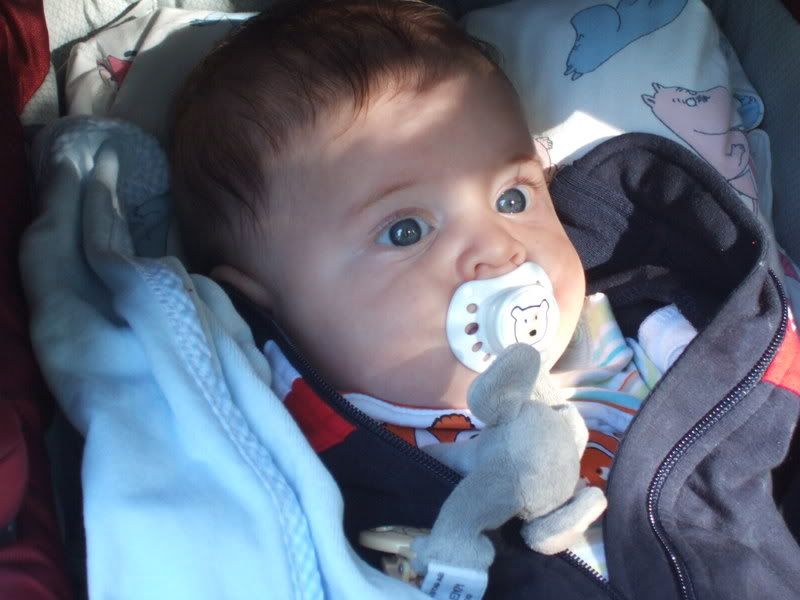
So, we were on holiday, then we came back, and I haven't had a proper chance to sit down and gather my thoughts. But I'd better try to collect myself or I'll have such a HUGE backlog...
The last Harry Potter - the end of an era. I've read them all, but I was never a hardcore fan. I got into them quite late, mostly to see what the fuss was about - possibly to read the book before I saw the film (I'm that kind of nerd). I've often been obnoxiously aggressive in company and claimed that they are highly overrated, and I will maintain that they are seriously flawed in many ways until my dying day... but over the years I've mellowed and can appreciate the good bits - these being Rowling's at times quite witty imagination. The names of characters are a particular favourite of mine, especially the Herbology teacher (a stand-in) with the double-barrelled name and the "don't you know"-s. I'd check her name but Mugglenet is too slow.
I compare all fantasy to Tolkien, and not much can compare. LOTR is of course special as it was written as one book and therefore is much more cohesive. It's quite obvious to me that HP is made up as she goes along, and that makes the secondary universe much less believable.
However, I can tell that I will shortly be interrupted, so I'll start summing up. The final of the series delivers, but also disappoints. As adults we might have appreciated something a bit darker, but it is, essentially, a children's series so I suppose it's good that things weren't too dire for the wizards and witches we know and love. It was rather a trudging read, with some "deus ex machina" solutions that felt contrived. Yes, I cried. Once. I quite enjoyed it though, the mr was annoyed with it but I was mellow and accepting for once. Of course, it MUST be read.
Saturday, July 21, 2007
MIsslyckad promenad men ändå inte
I torsdags tog jag en spontan långpromenad med Minimus i bärsjalen. Vi knallade iväg till Tant Grön, som enligt hemsidan skulle ha öppet, men inte hade det. Så jag hittade lite böcker istället i Hågasalens second-handhyllor... En Michael Crichton, en Laurie King, en Fay Kellerman och en Woody Allen till maken (som har En Fas).
Så dessa ska jag läsa nu när vi reser bort (till Båstad en vecka). Har redan börjat läsa om Grave Talent. Är nöjd (men hade varit nöjdare om jag kunnat köpa mina Green & Black's chokladkakor). Desutom har maken tydligen förhandsbeställt Harry Potter. Inte illa. Man måste ju...
Så dessa ska jag läsa nu när vi reser bort (till Båstad en vecka). Har redan börjat läsa om Grave Talent. Är nöjd (men hade varit nöjdare om jag kunnat köpa mina Green & Black's chokladkakor). Desutom har maken tydligen förhandsbeställt Harry Potter. Inte illa. Man måste ju...
Thursday, July 12, 2007
Tuesday, July 10, 2007
Intervju med Stieg Larsson
Satt och läste på stieglarsson.se och ser i en intervju med honom själv att han gillar speciellt Sara Paretsky och Val McDermid (varpå mannen stiger i min aktning något otroligt) samt Elizabeth George och Minette Walters (och så sjönk vi igen). :P
Det är synd att han är död. :(
Det är synd att han är död. :(
NU har jag läst Stieg Larssons två första
(Varning, länken går till otroligt jobbig Flash-sida. Människor som tror att Flash-intron är coola borde dömas till straffarbete i ett stenbrott.)
Jag kan inte skylla på makens långsamma läsning alls. Han läste ut dem och tjatade sedan på mig att jag skulle sätta igång, för han ville diskutera vissa grejer med mig. Men jag droooog på det - det är faktiskt svårt att läsa med ett spädbarn. Eller rättare sagt: jag blir så uppslukad av böcker att jag blir irriterad när den lille söte pojken som just fått en tand ligger och gnisslar mot mig och vill ha uppmärksamhet, och det är det inte värt. *skäms grundligt*
Löste det genom att läsa nattetid.
Män som hatar kvinnor
Mikael Blomkvist jobbar på, är delägare i och ansvarig utgivare för en uppkäftig tidsskrift som specialiserar sig på granskande journalistik. I sin iver att sätta dit en industrigangster har han åkt på en blåsning och nu blivit dömd för förtal. Eftersom han ändå behöver en time-out tar han ett uppdrag från en av Sveriges gammaldags industrimagnater, Henrik Vanger. Han ska skriva en bok om familjens historia, och samtidigt luska reda på vad som hände med Vangers brors sondotter, som spårlöst försvann på 60-talet. Under arbetet stöter Blomkvist på Lisbeth Salander, en 26-åring med ett våldsamt förflutet och en sociopatisk inställning till omvärlden, men med grymma hackerskillz, OMG. Tillsammans luskar de reda på sanningen, som är blodig och dyster, men har aspekter som kan hjälpa Blomkvist rädda sin tidning.
Bra saker med boken: helt okej deckare/thriller. Väl ihopsnickrad story, inga iögonenfallande lösa trådar eller deus ex machina-grepp (nåja, skulle väl vara hur de blir av med skurken då - och å andra sidan är jag rätt usel på att upptäcka sånt för jag läser för snabbt). Kort och gott - inte usel. Inte heller dålig. Skulle nog ge den en stark trea på en skala 1-5.
Mindre bra/dåligt: Larsson hade tydligen ingen tilltro till att man kan förstå relationer genom dialogen mellan parterna i den, utan förklarar allt för oss genom inre monologer. Vilket är trist, helt enkelt.
Han är för förtjust i de fria bisexuella no strings-förhållanden han fantiserat ihop. I don't care, Larsson. Du kan skriva att de har förhållandet, du måste inte gotta dig i det. Jag är inte så pryd - men du har precis bevisat att du egentligen är det. (OT: svårt att välja tempus när mannen är död. Som författare lever han ju, på sätt och vis. Hav överseende.)
Produkt-jävla-placering. På en erbarmlig nivå rent litterärt. T.ex.:
Vissa lite larviga faktafel, eller vad man ska kalla det. T.e.x refereras till flickans försvinnande som ett "låsta rummet-mysterium", varpå det kontras med "det är ingen roman av Dorothy Sayers". Nu är ju inte hon den som är mest känd för sådana mysterier, utan det är John Dickson Carr, och om man inte vet det så ligger det väl närmare till hands att dra till med Agatha Christie. Känns onaturligt och konstlat.
Och superirriterande när folk ska tituleras helt plötsligt, i 2000-talets Sverige. Som jag skrivit förr - en av mina favoritsaker med deckare är att de anses som litterära bagateller, men kan ge läsaren ögonblicksbilder av tiden då de skrevs. Läser folk den här om femtio år kan de förledas tro att det var normalt att kalla unga kvinnor fröken. *suck*
Kort sagt så stannar boken vid en deckare, men når aldrig den litterära kvalitet som gör en deckare klassisk.
Flickan som lekte med elden
Tidskriften Millennium har ett nytt scoop på gång, ett temanummer om trafficking. Många män med inflytande kommer att namnges och avslöjas som utnyttjare av flickor och kvinnor. Men paret som står bakom all research mördas, och på vapnet finns Lisbeth Salanders fingeravtryck. Blomkvist är en av de mycket få som inte tror att hon är skyldig, utan börjar misstänka att svaret finns i Lisbeths förflutna.
Bra saker: Mycket tajtare som roman betraktat. Riktigt spännande, och Larsson lyckas få till en trovärdig historia trots spionanknytning.
Dåliga saker: En hel del av problemen från ovan finns kvar. I mängd. Och PAOLO ROBERTO? Som gör korstecken framför sin Madonnabild? :S
Kan tillägga att min man störde sig på beskrivningen av hackers och vad de gör, men jag köpte det, eftersom jag är mer okunnig än han.
Jag kommer helt klart att läsa trean, Luftslottet som sprängdes, men jag kan inte sälla mig helt okritiskt till Larssons hyllningskör. Böckerna är helt klart mer samhällsdebatt och -kritik än minnesvärd litteratur.
Jag kan inte skylla på makens långsamma läsning alls. Han läste ut dem och tjatade sedan på mig att jag skulle sätta igång, för han ville diskutera vissa grejer med mig. Men jag droooog på det - det är faktiskt svårt att läsa med ett spädbarn. Eller rättare sagt: jag blir så uppslukad av böcker att jag blir irriterad när den lille söte pojken som just fått en tand ligger och gnisslar mot mig och vill ha uppmärksamhet, och det är det inte värt. *skäms grundligt*
Löste det genom att läsa nattetid.
Män som hatar kvinnor
Mikael Blomkvist jobbar på, är delägare i och ansvarig utgivare för en uppkäftig tidsskrift som specialiserar sig på granskande journalistik. I sin iver att sätta dit en industrigangster har han åkt på en blåsning och nu blivit dömd för förtal. Eftersom han ändå behöver en time-out tar han ett uppdrag från en av Sveriges gammaldags industrimagnater, Henrik Vanger. Han ska skriva en bok om familjens historia, och samtidigt luska reda på vad som hände med Vangers brors sondotter, som spårlöst försvann på 60-talet. Under arbetet stöter Blomkvist på Lisbeth Salander, en 26-åring med ett våldsamt förflutet och en sociopatisk inställning till omvärlden, men med grymma hackerskillz, OMG. Tillsammans luskar de reda på sanningen, som är blodig och dyster, men har aspekter som kan hjälpa Blomkvist rädda sin tidning.
Bra saker med boken: helt okej deckare/thriller. Väl ihopsnickrad story, inga iögonenfallande lösa trådar eller deus ex machina-grepp (nåja, skulle väl vara hur de blir av med skurken då - och å andra sidan är jag rätt usel på att upptäcka sånt för jag läser för snabbt). Kort och gott - inte usel. Inte heller dålig. Skulle nog ge den en stark trea på en skala 1-5.
Mindre bra/dåligt: Larsson hade tydligen ingen tilltro till att man kan förstå relationer genom dialogen mellan parterna i den, utan förklarar allt för oss genom inre monologer. Vilket är trist, helt enkelt.
Han är för förtjust i de fria bisexuella no strings-förhållanden han fantiserat ihop. I don't care, Larsson. Du kan skriva att de har förhållandet, du måste inte gotta dig i det. Jag är inte så pryd - men du har precis bevisat att du egentligen är det. (OT: svårt att välja tempus när mannen är död. Som författare lever han ju, på sätt och vis. Hav överseende.)
Produkt-jävla-placering. På en erbarmlig nivå rent litterärt. T.ex.:
[..]de hade kommit överens om att ge dottern en iPod, en mp3-spelare inte nämnvärt större än en tändsticksask men som kunde rymma hela Pernillas skivsamling. Vilken var ganska omfattande.Ursäkta? Vad sysslade redaktören med? - för detta är bara ett exempel av många. Jag och min man har skrattat gott åt det här. Riktigt uselt.
Vissa lite larviga faktafel, eller vad man ska kalla det. T.e.x refereras till flickans försvinnande som ett "låsta rummet-mysterium", varpå det kontras med "det är ingen roman av Dorothy Sayers". Nu är ju inte hon den som är mest känd för sådana mysterier, utan det är John Dickson Carr, och om man inte vet det så ligger det väl närmare till hands att dra till med Agatha Christie. Känns onaturligt och konstlat.
Och superirriterande när folk ska tituleras helt plötsligt, i 2000-talets Sverige. Som jag skrivit förr - en av mina favoritsaker med deckare är att de anses som litterära bagateller, men kan ge läsaren ögonblicksbilder av tiden då de skrevs. Läser folk den här om femtio år kan de förledas tro att det var normalt att kalla unga kvinnor fröken. *suck*
Kort sagt så stannar boken vid en deckare, men når aldrig den litterära kvalitet som gör en deckare klassisk.
Flickan som lekte med elden
Tidskriften Millennium har ett nytt scoop på gång, ett temanummer om trafficking. Många män med inflytande kommer att namnges och avslöjas som utnyttjare av flickor och kvinnor. Men paret som står bakom all research mördas, och på vapnet finns Lisbeth Salanders fingeravtryck. Blomkvist är en av de mycket få som inte tror att hon är skyldig, utan börjar misstänka att svaret finns i Lisbeths förflutna.
Bra saker: Mycket tajtare som roman betraktat. Riktigt spännande, och Larsson lyckas få till en trovärdig historia trots spionanknytning.
Dåliga saker: En hel del av problemen från ovan finns kvar. I mängd. Och PAOLO ROBERTO? Som gör korstecken framför sin Madonnabild? :S
Kan tillägga att min man störde sig på beskrivningen av hackers och vad de gör, men jag köpte det, eftersom jag är mer okunnig än han.
Jag kommer helt klart att läsa trean, Luftslottet som sprängdes, men jag kan inte sälla mig helt okritiskt till Larssons hyllningskör. Böckerna är helt klart mer samhällsdebatt och -kritik än minnesvärd litteratur.
Monday, June 11, 2007
Min man har handlat deckare
Han har köpt Stieg Larssons två första romaner, för "alla snackar om dem". Bra tycker jag, som har tänkt läsa dem länge men glömmer att titta efter dem på biblioteket, och när jag kommer ihåg så är de utlånade. Problemet är att han började läsa den första, och jag vill OCKSÅ läsa dem i rätt ordning, bara för att. Alltså får jag vänta - och till saken hör att jag konstant mobbar stackaren för att han tycker att så många böcker är så bra att han måste läsa allt samtidigt och därför aldrig avslutar något. Dock, fördelen med deckare är ju den linjära handlingen som gör att man dras med, vänder blad och sålunda blir klar. Jag hyser hopp. Tills vidare läser jag sömnadsbeskrivningar, för jag vill jättegärna sy en klänning jag kan amma i.
Igår hade SvD en stor artikel om just bokbloggar, vilket var lite kul. Kontentan var att de inte kan ersätta proffsiga recensenter - no shit Sherlock, min kan definitivt inte det. Jag är så professionell och klar i skallen innan jag sätter mig att skriva så det kan ingen tro, men när jag väl har fingrarna på tangenterna blir det inte mer än "Öööhhh, den var bra. Bra språk och spännande.". Om jag låtsas att jag är 12 kan jag kanske få skriva bokrecensionerna på KP.
Måste kolla upp några av de bloggar Svenskan skrev om i alla fall. Vem vet, man kanske hittar en favorit.
Igår hade SvD en stor artikel om just bokbloggar, vilket var lite kul. Kontentan var att de inte kan ersätta proffsiga recensenter - no shit Sherlock, min kan definitivt inte det. Jag är så professionell och klar i skallen innan jag sätter mig att skriva så det kan ingen tro, men när jag väl har fingrarna på tangenterna blir det inte mer än "Öööhhh, den var bra. Bra språk och spännande.". Om jag låtsas att jag är 12 kan jag kanske få skriva bokrecensionerna på KP.
Måste kolla upp några av de bloggar Svenskan skrev om i alla fall. Vem vet, man kanske hittar en favorit.
Saturday, June 02, 2007
Mary Wortley Montagu: Life on the Golden Horn
Mr Bani picked this up in Pareeeee no less. Lucky fella. It's a slim little volume containing a selection of the letters she wrote to friends and family from Constantinople (also from the journey there and thence). Her husband had been stationed there as ambassador - a post that lasted only a year, but Lady Mary made full use of her time there. She learnt Turkish, often went about the town in Turkish dress (in other words a full veil, a very useful disguise), and seems to have taken pleasure in being able to refute the more fanciful ideas of the country that had been spread by more inventive travel writers.
I looked Lady Mary up on Wikipedia, and she seems to have been a very colourful personality. This certainly is apparent in her letters anyway. They are in turns descriptive, intelligent, scathing and pensive. She writes of fashion to her sister:
I'm really pleased to have read this little book. It was entertaining and informative - who can argue with that? While reading I mused upon the lost art of letter-writing - how I wish we could end our letters with stuff like
The book is part of a Penguin series called Great Journeys, 20 books by different travel writers from Herodotos to Kapuściński. It would be great fun to read them all - to own them all! - but I shouldn't encourage my book-hoarding side.
In other news I've caught a nasty virus. My throat is sore as hell, and I am about to gargle with an infusion of sage, garlic and ginger. Let's hope I don't vomit. Again.
Your whole letter is full of mistakes from one end to the other. I see you have taken your ideas of Turkey from that worthy author Dumont, who has writ with equal ignorance and confidence. 'Tis a particular pleasure to me here to read the voyages to the Levant [...] so full of absurdities I am very well diverted with them. They never fail to give you an account of the women, which 'tis certain they never saw, and talking very wisely of the genius of men, into whose company they are never admitted, and very often describe mosques which they dare not peep into.
I looked Lady Mary up on Wikipedia, and she seems to have been a very colourful personality. This certainly is apparent in her letters anyway. They are in turns descriptive, intelligent, scathing and pensive. She writes of fashion to her sister:
I saw the other day a gala for Count Althann, the Emperor's favourite, and never in my life saw so many fine clothes ill-fancied [...] provided they can make their clothes expensive enough that is all the taste they show in them.and to Alexander Pope of the horrors of war.
[...]the field being strewed with the skulls and carcases of unburied men, horses and camels. I could not look without horror on such numbers of mangled human bodies, and reflect on the injustice of was that makes murder not only necessary but meritorious. Nothing seems to me a plainer proof of the irrationality of mankind, whatever fine claims we pretend to reason [...]
I'm really pleased to have read this little book. It was entertaining and informative - who can argue with that? While reading I mused upon the lost art of letter-writing - how I wish we could end our letters with stuff like
Upon this occasion admire the heroism in the heart of your friend etc.instead of the dull "Your's truly".
The book is part of a Penguin series called Great Journeys, 20 books by different travel writers from Herodotos to Kapuściński. It would be great fun to read them all - to own them all! - but I shouldn't encourage my book-hoarding side.
In other news I've caught a nasty virus. My throat is sore as hell, and I am about to gargle with an infusion of sage, garlic and ginger. Let's hope I don't vomit. Again.
Subscribe to:
Posts (Atom)